 Personalized attention +34 96 206 62 98
 SHIPPING TO ALL

 9/10 Rating
 Discreet shipping
 Iniciar sesión
  0
0
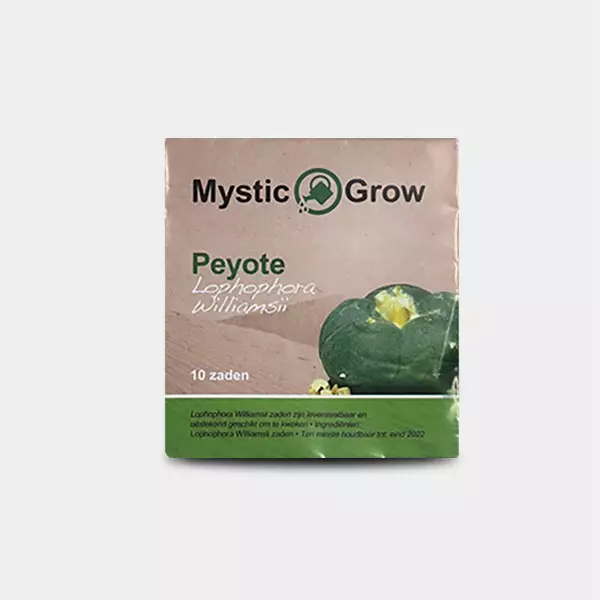
Carefully selected peyote seeds for cultivating one of the world's most enigmatic and symbolic cacti. They stand out for their botanical uniqueness, slow development, and profound psychoactive and spiritual significance linked to ancient indigenous traditions.

Data sheet
Description
The peyote cactus, scientifically known as Lophophora williamsii, is a small cactus native to the Chihuahuan Desert in Mexico and southern Texas. Unlike other cacti, it grows close to the ground and has a rounded, button-like shape, making it unmistakable in the world of cacti.
From these peyote seeds, the grower begins a slow and patient process, very different from that of other fast-growing cacti. Its unhurried development is part of its essence: each stage reflects this species' extreme adaptation to arid environments and severe climatic conditions. Over time, peyote forms compact, grayish-green bodies, with soft tubercles instead of spines.
The peyote cactus is globally renowned for containing mescaline, a natural psychoactive alkaloid responsible for the profound sensory and perceptual effects attributed to it for thousands of years. In indigenous North American cultures, this plant has been considered a living sacrament, used in spiritual ceremonies for healing, introspection, and connection with the transcendent.
Mescaline is primarily concentrated in the upper part of the cactus, known as the "button." Throughout history, different peoples developed ritual forms of preparation and use, practices that are now studied in anthropology, the history of religions, and botany.
The effects traditionally described include profound alterations of perception, symbolic visions, emotional intensification, and expanded states of consciousness. This relationship between plant, psychoactivity, and spirituality has made peyote a central element within traditions such as the Native American Church, where its ritual use is protected under very specific legal frameworks.
Cultivating peyote seeds is a delicate process that requires consistency and patience. Germination is usually carried out in controlled environments, with stable temperatures and moderate humidity levels. Unlike other cacti, peyote grows slowly from its earliest stages, forming small, compact seedlings.
During the first few years, development is gradual but very stable if its basic needs are met. As it matures, the cactus becomes more resistant, tolerating long periods of drought and adapting well to well-drained mineral substrates. This unhurried pace makes its cultivation an almost contemplative experience, ideal for growers who value long processes and the natural evolution of the plant.
You might also like