 Personalized attention +34 96 206 62 98
 SHIPPING TO ALL

 9/10 Rating
 Discreet shipping
 Iniciar sesión
  0
0
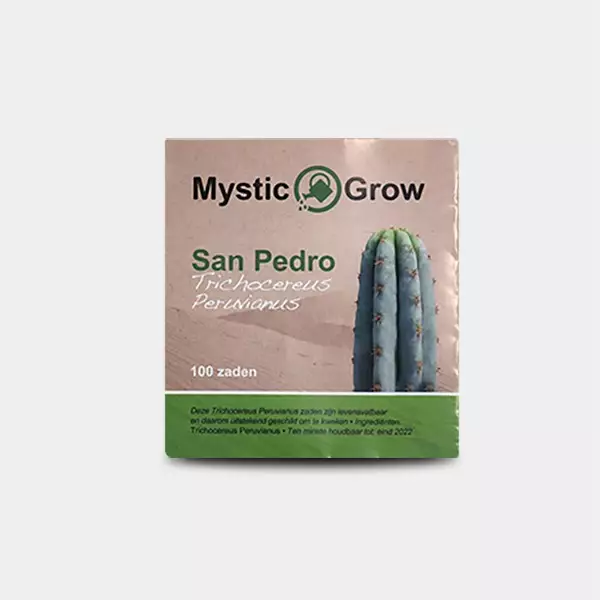
San Pedro seeds selected for those looking to grow one of the most emblematic cacti of the Andes. They stand out for their reliable germination, vigorous growth, and strong psychoactive load inherited from the Andean indigenous tribes.

Data sheet
Description
The San Pedro cactus, scientifically known as Echinopsis pachanoi (also Trichocereus pachanoi), is a columnar cactus native to the Andes Mountains, found in regions of Peru, Ecuador, and Bolivia. It is a species adapted to mountain climates, capable of rapid growth and displaying an imposing structure even in its early years of life.
From these San Pedro seeds, the grower can observe a progressive and very rewarding growth process. Its bluish-green stems, with well-defined ribs, evolve into robust columns that, over time, can reach several meters in height. It is a resistant, long-lived plant with a strong visual presence, highly valued in the cultivation of special cacti.
The San Pedro cactus has been known for thousands of years to contain mescaline, a natural psychoactive alkaloid that has profoundly shaped its cultural history. In pre-Columbian Andean cultures, this plant was known as Wachuma and was associated with healing rituals, introspection, and spiritual connection.
The mescaline in the San Pedro cactus is naturally found in the cactus tissues, especially in the outer layer of the stem. Throughout history, different cultures developed traditional methods to isolate or concentrate its active principles for ritual purposes, processes that today are part of the anthropological and botanical study of the plant.
The effects traditionally attributed to this substance include altered states of perception, sensory intensification, and deep introspective experiences. This cultural and symbolic legacy has made San Pedro one of the most studied plants in South American ethnobotany, surrounded by an aura of respect, mysticism, and ancestral literature.
The cultivation of San Pedro seeds is an accessible process, but it requires patience and attention in its early stages. Germination usually takes place in warm, controlled environments, where humidity and light play a key role.
During the first stages, the seedlings grow slowly, developing a compact structure before beginning their columnar phase. As the cactus matures, it becomes especially resistant and tolerant, reducing its watering needs and adapting well to different substrates as long as they have adequate drainage.
It is a species that responds well to basic care, making it a very interesting option for growers who want to get started with unique cacti without giving up a plant with character and historical depth.
You might also like