Personalized attention +34 96 206 62 98
 Free shipping to Iberian Peninsula from 30€
 9/10 Rating
 Discreet shipping

Pests in cannabis plants are common and can seriously harm them, indeed they can be a real pain in the neck. One of the most dreaded parasites for growers is the aphid, which appears in marijuana plants during the spring-summer period, as it is their natural reproductive season. They thrive in warm and dry environments., that’s why we are going to explain out how to get rid of aphids on cannabis plants.
What are aphids?
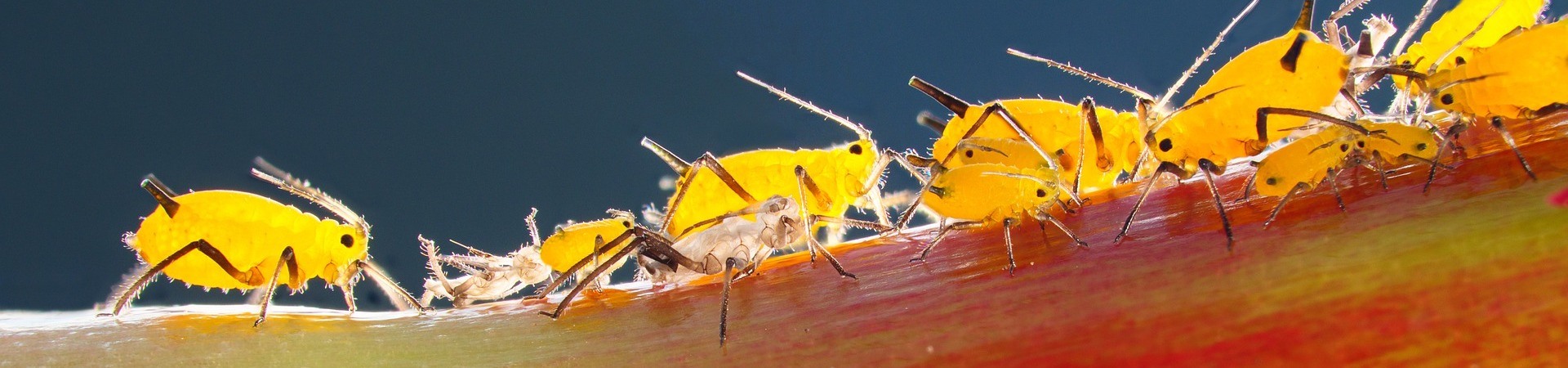
The aphid, or tiny insect, measures about 3 mm, with around 3500 different species, resulting in white, yellow, reddish, green, pink, brown, gray, or black aphids. Despite their tiny size, their anatomy is divided into three parts: head, abdomen, and thorax.
Moreover, they reproduce quickly, causing significant damage in a short time. In fact, they can produce between 3 and 10 larvae per day, which can live up to 25 days. Some are born winged and capable of moving to other plants and infecting them, so early identification of aphids can be crucial to prevent irreversible damage to the marijuana plant.
Identifying aphids

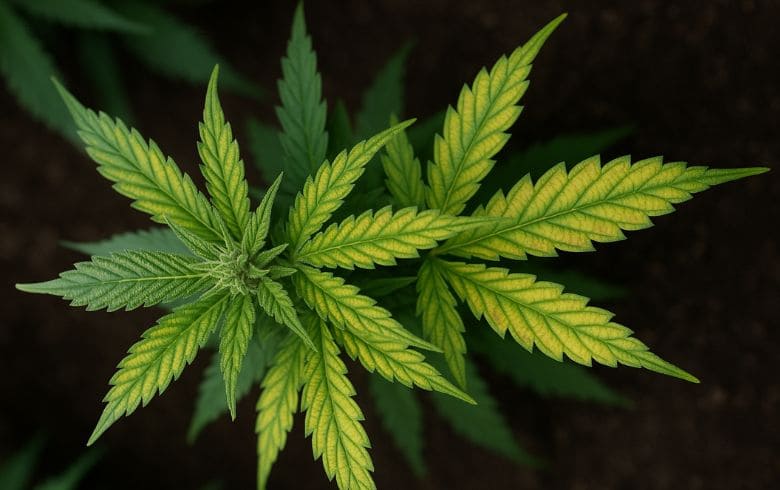
Spotting an aphid infestation in a marijuana plant can be challenging initially because they hide quite well on the undersides of leaves as they are the same color!. Once they start attacking the plant, the consequences become visible: the leaves discolor, turn yellow, stick together, or curl. They may even wrinkle, dry out, and eventually die.
To avoid reaching this point, regularly monitor the cannabis plant’s condition. Aphids usually form large colonies on the undersides of leaves or on the inner stem so they may go unnoticed in the first days of infection. Aphids also cover the plant with a thick, sticky, sweet substance known as honeydew, which they use to protect themselves from predators, providing another method to identify this parasite.
The sweetness of honeydew tends to attract insects like bees and wasps, but especially ants, enticed by the delightful aroma. If you see ants roaming around your crop, it’s a red flag for aphid infestation.
How aphids affect cannabis plants
Aphids, especially their offspring before reaching the adult stage (nymphs), feed on the sap of marijuana plants, which contains the nutrients and carbohydrates that cannabis plants feed on, causing serious issues in the plant’s development. Its deficit results in a decrease in the quantity and quality of buds, in addition to causing stress: the plant will halt its normal feeding and growth to focus all its energy on combating the invader.
The fissures created by aphids to reach the sap simultaneously cause a wound in the marijuana’s tissue that the plant must repair and therefore, becomes an ideal environment for the transmission of any type of virus. Finally, aphids often secrete honeydew on the buds, hindering their ability to breathe, promoting stunted growth, and the onset of fungi.
Preventing aphids

Aphid infestations occur when the environment becomes warm and dry, so cannabis growers in regions with these conditions should regularly monitor their plants, inspecting leaves, stems, and checking for changes in coloration. This is the best way to act as early as possible against an infestation.
Poor basic care, lack of ventilation, inadequate watering, or low humidity increases the likelihood of these parasites. In addition, excessive nitrogen in fertilizer can attract typical marijuana pests like caterpillars or thrips. That’s why, in indoor cultivation, changing clothes after being outdoors before approaching plants is crucial to eliminate the possibility of transferring parasites on clothing.
Yellow traps are useful for detecting aphids, as flying females get trapped in the adhesive strips. Products without toxic pesticides can stimulate the appearance of aphid natural enemies without harming the marijuana plant. Diatomaceous earth or Neem oil-based products act as natural preventatives and pesticides. Another option is using products like Canna Cure to create a film on the plant that hinders pest installation.
[ppgbo products=”118,1855,5296″ language=”en”]
How to get rid of aphids in marijuana plants?

Once aphids are established in the marijuana crop, the only option is to fight against them. If the affected plants are in the growth phase, a chemical pesticide or pest control products for cannabis can be used to quickly eliminate the infestation, though an organic option is always preferable if possible.
[ppgbo bestsellers=”137″ counter=”3″]
Using rapeseed oil to suffocate aphid eggs and prevent other pests or spraying organic pyrethrins is an option. When an infestation occurs indoors, it’s advisable to clean the cultivation room with an automatic nebulizer.
However, if the plants are in the flowering phase, only natural products should be used, as the risk of toxic residues on the plant is much higher. Neem tree is an excellent organic pest preventer and eliminator, killing the insect upon contact.
After applying any treatments, it is recommended to spray potassium soap two or three days later to eliminate honeydew and remnants of exoskeletons.
Another alternative is using natural predators in cultivation to eradicate the parasites.
- Parasitoids: their larvae grow inside the aphid, causing its death.
- Entomopathogenic fungus: a type of fungus that causes a lethal condition in some insects.
- Green lacewings: insects that lay eggs near aphid colonies on marijuana plant leaves. The larvae are cannibals and, upon hatching, have such a fierce hunger that they consume all aphids around them.
- Ladybugs: despite appearing harmless, these insects are big fans of aphids. They are capable of wiping out an entire colony.
Finally, home remedies such as a preparation with tomato leaves, garlic extract, tobacco leaf spray, or nettle broth can be used, which is also effective against whiteflies and red spider mites, among others.
Therefore, the best remedy to combat an aphid infestation in marijuana plants is prevention. Furthermore, if intervention is needed, it is advisable to use organic products to avoid introducing toxic residues that may persist in the flowers.