Personalized attention +34 96 206 62 98
 Free shipping to Iberian Peninsula from 30€
 9/10 Rating
 Discreet shipping


Wondering how to use jiffys and rockwool correctly? Jiffy and rockwool trays are popular methods that can help you achieve this. These systems are widely used in horticulture as they provide optimal conditions for root development without soaking the growing medium. Learn how to use rockwool and jiffys in this article.
What are jiffy or rockwool trays?
Jiffy trays are a fantastic option for those looking for effective methods to root cuttings effortlessly. These trays usually come with compressed peat capsules that, when moistened, expand and become a perfect medium for root growth.
On the other hand, rockwool trays are made of volcanic rock fibers melted and transformed into a spongy, fibrous material. These fibers are molded into blocks or trays, which are used as a substrate for plant cultivation.
Characteristics of jiffy or rockwool trays
The characteristics of both compounds are:
- They serve as a germination medium for seeds and rooting for cuttings.
- They allow for good water retention and aeration, ensuring proper hydration of the plants.
- They are easy to use and versatile.
- They are inert and sterile materials, maintaining control over plant nutrition.
Differences and similarities between both
| Characteristic | Jiffys | Rockwool |
| Material | Pressed peat and coco fibers | Volcanic rock fibers |
| Biodegradable | Yes | No |
| Use | Seed germination and rooting of cuttings | Seed germination and adult plant cultivation |
| Hydration | Expand on contact with water | High water retention capacity and good aeration |
| Advantages | Easy to use, biodegradable, reduces transplant shock | Precise control of the root environment, reusable, structural support for roots |
| Disadvantages | Can dry out quickly | Not biodegradable, proper waste management required |
| Water retention and aeration | Good water retention and aeration | High water retention capacity and good aeration |
| Uses | Germination and direct transplanting to soil or pots | Hydroponic systems and intensive cultivation |
| Environmental impact | Biodegradable and environmentally friendly | Not biodegradable, proper waste management required |
How to use Jiffy trays for rooting cuttings
Jiffy trays are a fantastic option for those looking for effective methods to root cuttings effortlessly. These trays usually come with compressed peat capsules that, when moistened, expand and become a perfect medium for root growth.
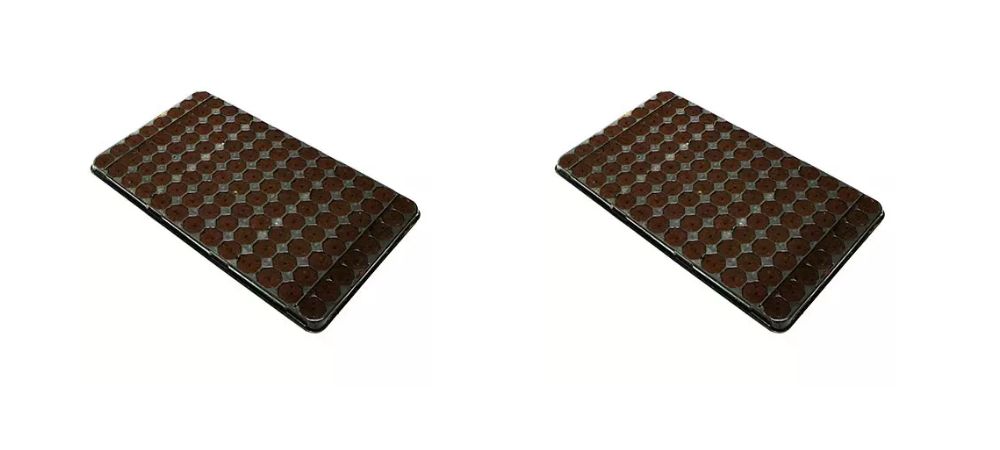
Steps for rooting cuttings in jiffy trays
- Place the capsules in the tray and add warm water.
- Wait a few minutes until the peat fully expands.
- Select and prepare the cuttings.
- Make a small hole in the center of each expanded capsule.
- Insert the base of the cutting into the hole, ensuring it is firmly held.
- Maintain high humidity.
- Place the tray inside a propagator or cover it with a transparent lid.
- Spray the cuttings regularly to maintain high humidity without directly soaking the medium.
Using these techniques and tips, you can learn how to make marijuana cuttings in jiffys and turn them into a valuable tool facilitating efficient rooting for seeds and cuttings.
How to root in rockwool: step-by-step guide
Using the rockwool tray is a popular technique among growers due to its efficiency and ease of the process. The steps to perform it correctly are:
- Cut the rockwool using 1.5-inch blocks for small cuttings and 4-inch blocks for larger plants.
- Moisten the rockwool blocks with water with a good pH (ideally between 5.5 and 6.0) to ensure they are fully saturated.
- Prepare the cuttings by cutting just below the node, always ensuring tools are sterilized before use.
- Use rooting hormones by dipping the cut end of the cutting into the rooting hormone.
- Place each cutting in the rockwool blocks and in a tray, ensuring it is firm but not too compacted. You can place it in a propagator to maintain high humidity.
- Maintain good temperature and proper ventilation during rooting. For this, the temperature should be around 80ºF (27ºC).
- When you get visible and strong roots, you should transplant to larger blocks or a quality hydroponic system.
Maintaining proper hygiene throughout the process is crucial to avoid problems such as algae or excessive lime buildup, which could alter the medium’s pH.
Common problems when using jiffy and rockwool trays
Although jiffy trays and rockwool are effective methods for rooting cuttings, some common problems can arise during the process, such as the following:
Soaking jiffys or rockwool
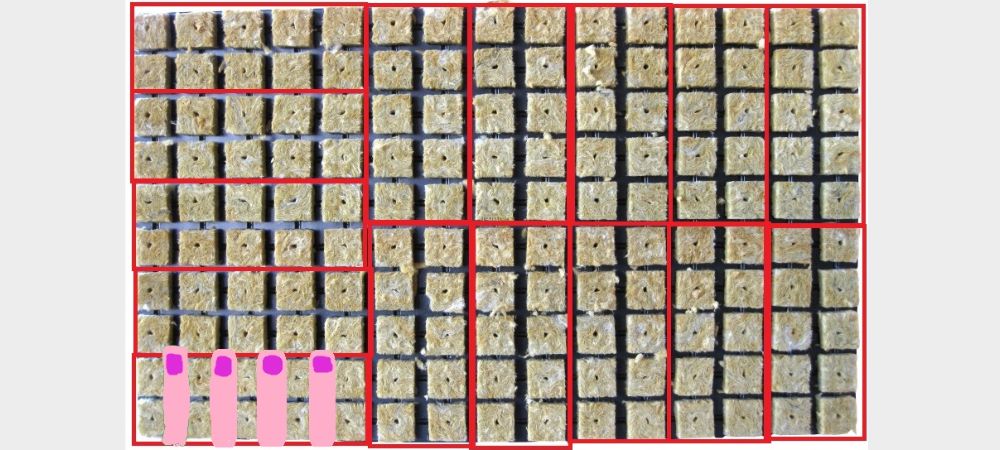
When cuttings are sprayed directly over the medium, it can become too wet. You can cut the tray into double rows of 5 to get 15 pieces of 10 cuttings. Spraying the cuttings upside down before returning them to the propagator ensures the medium does not get wet, speeding up rooting.
Excess moisture
Excess moisture in the medium can cause the stems to rot. For this, good ventilation in the propagator is essential to avoid excessive moisture buildup. It is also important to constantly monitor the medium’s moisture and adjust the spraying frequency if necessary.
Algae growth on the wet surface
The wet surface of the medium can promote algae growth. To prevent this, it is necessary to maintain proper cleanliness of the growing area and consider using a nutrient solution that helps balance the medium’s pH. Algae usually grow in high pH environments, and adjusting it can prevent their appearance.
By following these tips on how to use jiffys and rockwool, you can achieve quality results easily.