Personalized attention +34 96 206 62 98
 Free shipping to Iberian Peninsula from 30€
 9/10 Rating
 Discreet shipping

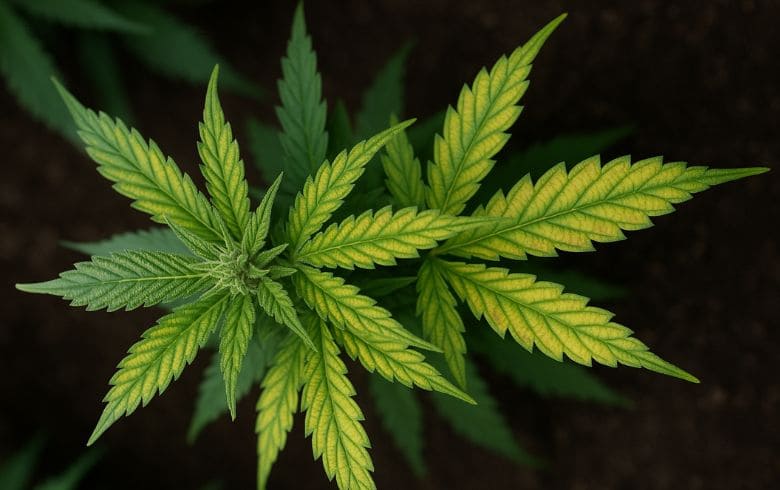
When first cultivating, many new growers aim to quickly achieve an abundant flower production without realizing the importance of other factors such as the number of leaves or the thickness of the stem. Therefore, it is crucial to understand the importance of leaves, which are fundamental for the nourishment and development of the marijuana plant; without them, the plant could not grow or bloom, thus preventing the enjoyment of the desired flowers.
What is the function of leaves in marijuana plants?
Leaves are one of the most important organs in the life of any plant, as they allow photosynthesis to feed themselves. This is a process used by the leaves to absorb light, known as photosynthesis, which consists of manufacturing chemical energy by transforming solar energy. This process takes place in the chloroplasts of the leaves, in small molecules known as thylakoids.
Leaves perform functions as important as roots or stems, although they are often not given the importance they deserve.
One factor to emphasize is that leaves should not be removed from the plants under any circumstances, as this removes their light absorption area. Many times, leaves that cover the buds are cut off because it is believed that absorption will be greater. However, by doing this, development will be halted and production may be lost, as the leaf absorbs energy to send to the bud.
Likewise, when a pest affects them, it damages the leaves causing small spots, absorbing less light, which affects their development.
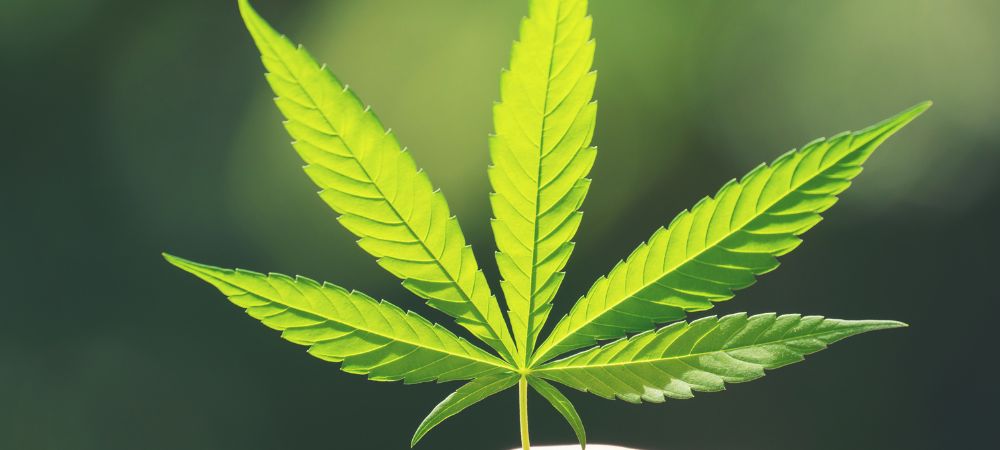
Parts of the leaf
To fully understand the functioning of the leaf, it is necessary to know the names of some of its parts and their functions. These parts are:
Petioles
This is the small stick that serves as a connection between the branch and the leaf. Its function is to hold the leaf to the trunk and establish a bridge between the trunk and the leaves, allowing the entry and exit of information as well as food.
Upper surface
This is the upper part of the leaves, which is responsible for absorbing light, so it is considered one of the most important parts. It is crucial that both the color and condition of the upper surface are correct, as it can help detect pests, deficiencies, or diseases.
Lower surface
This is the lower part of the leaf. In other words, it is on the opposite side of the upper surface, facing the plant. Thanks to the lower surface, it is known that many genetics (especially Indicas from very hot areas) can survive long periods of drought. They use the broad part to store a small amount of water in each leaf, which they then slowly supply, allowing them to survive in the most extreme conditions.
Apex
This is the name given to each of the tips of the leaf. The first leaves created in marijuana plants, called cotyledons, only have one apex, so they are almost elongated oval-shaped. Subsequently, leaves with 3 apexes begin to appear, which are precursors of the 5-apex leaves that are so characteristic.
When too much fertilizer is added, it is usually in this part where signs can be seen first, as it will begin to shrink and then turn yellow until it spreads throughout the leaf if the necessary measures are not taken.
Types of cannabis leaves
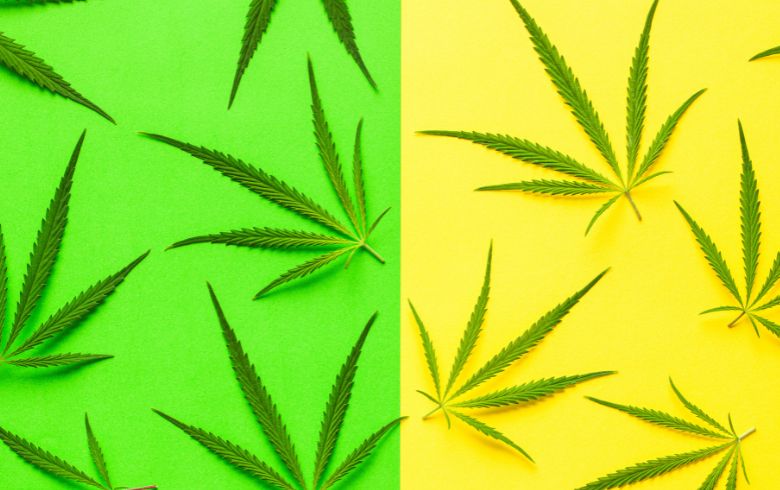
There are three main categories of marijuana, commonly recognized under the general term Cannabis sativa L., from which different types of cannabis leaves also come: Sativa, Indica, and Ruderalis.
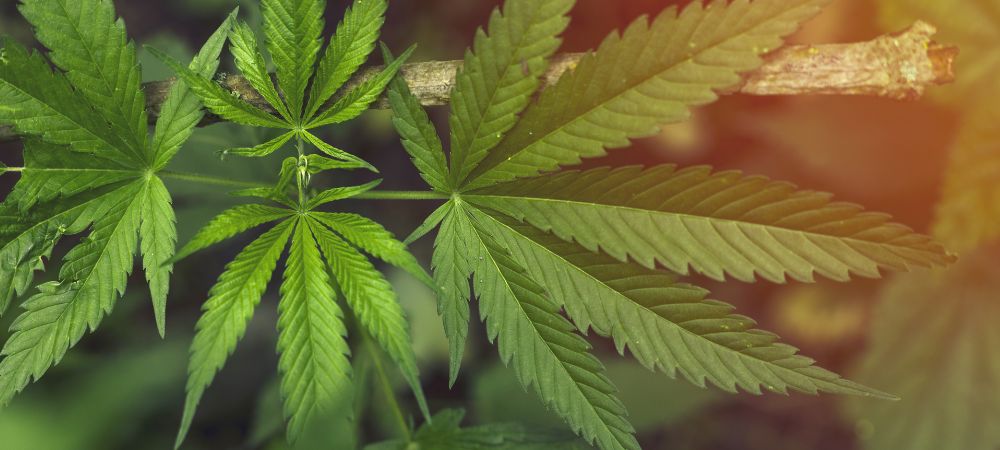
Cannabis leaves by variety
It is worth mentioning that the majority of cannabis varieties found in the current market are hybrids, resulting from the combination of two or three of these main groups. Thus, the cannabis leaves commonly seen in crops present a mix of varied characteristics. These can have from 3 to 11 leaflets and vary in shape, from thin and elongated to broad and rounded.
They can be differentiated as follows:
- Sativas: The leaves of Sativa seeds are recognizable by their length and thin leaflets, which can have up to 13 fingers. Sativa plants usually have a lime green tone, indicating a lower chlorophyll content, which is associated with a longer flowering period.
- The leaves of Indica seeds are short and broad, with 7 to 9 robust leaflets. Afghan-origin Indicas are known for their particularly large and dark green leaves, indicative of their high chlorophyll content, which is believed to favor a faster flowering cycle.
- As for Ruderalis, its leaves are thinner and usually have between 3 and 5 fingers. These leaves resemble those of young Sativa plants in both shape and color. Ruderalis are unique in their ability to flower regardless of the light cycle they are exposed to.
Cannabis leaves according to their location on the plant
On the other hand, it is possible to distinguish between two types of leaves on the marijuana plant, based on their location: fan leaves and sugar leaves.
- Fan leaves are large, presenting the characteristic “finger” shape, acting as solar panels, capturing light to convert it into energy for the plant’s growth. These leaves can also store emergency nutrients, such as nitrogen. They contain minimal amounts of THC, CBD, and other cannabinoids.
- Sugar leaves are smaller, emerging from the flowers. They are called this because of the abundant resin that forms on them during flowering, resembling a sugar layer. These leaves are usually harvested, separated from the buds, and used to make extractions.
What problems can be identified through the leaves?
Cannabis leaves provide a lot of information about how the plant is developing, so it’s useful to know how to recognize yellow leaves in marijuana or burns on marijuana plants. Among other signals are the following:
| Leaf signal | Possible health problems |
| Yellowing leaves | Nitrogen deficiency Over-fertilization or over-watering Over-watering Unbalanced pH Pests Root rot Septoriosis |
| Curled leaves | Heat stress Excess nutrients or watering Low temperatures Magnesium deficiency |
| Dry and brittle leaves | Heat stress Light burns Over-fertilization Lack of water Low humidity Calcium deficiency |
| Wilted leaves | Lack of watering Wind burn Nutrient deficiency Pest attack |
| Colorful leaves | Nutrient deficiency Potassium deficiency pH problems |
| Holes and discoloration | Insect attack Fungi or diseases |
| Strange spots | There are different types of spots in marijuana indicating different causes: Possible presence of fungi or specific diseases Tobacco mosaic virus Mutations Albinism |
Leaf color and THC levels
The color and shape of the leaves provide valuable information, reflecting aspects such as the plant’s genetics, sugar levels, hydration or nutritional status, and even the pests that have affected it. Additionally, cannabis leaves can also indicate the type of predominant cannabinoid the plant produces. Therefore:
- A lighter green hue and thin leaflets indicate high levels of CBD.
- Thick leaflets and dark green hues point to higher levels of THC.
Various studies indicate that it is possible to infer the chemical compounds of cannabis through its leaves, according to an article in the journal HortScience, which analyzed visual differences between 21 cannabis varieties, identifying thirty variations in stages such as vegetative, flowering, and harvest.
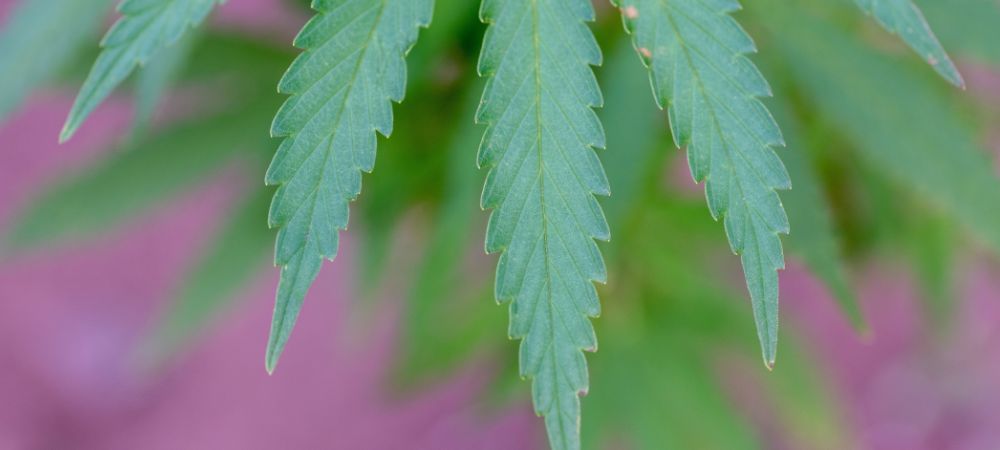
By classifying the plants based on their appearance and subsequent chemical analysis, a clear correlation was found between the appearance of the plants and their THC and CBD levels, allowing for differentiation between:
CBD-rich plants
Plants from CBD seeds exhibit the following characteristics in their leaves:
- They have a light green color.
- Thin leaflets.
- An abundance of primary and secondary teeth on the edges of the leaflets.
- They have dense, resinous trichomes.
Moderate levels of CBD and THC
Plants with moderate levels of THC and CBD show distinctive characteristics such as:
- A more intense green color and medium-width leaflets.
- Unique hues and shapes.
- More primary teeth and secondary teeth.
- Fewer trichomes and less resin.
THC-rich plants
On the other hand, THC-rich genetics show leaves that stand out for:
- Having dark green leaves.
- Wide leaflets.
- High density of resinous trichomes.
The study authors suggest the importance of marijuana leaves and how these visual markers could serve as a preliminary tool for differentiating cannabis chemical varieties before proceeding to a more detailed analysis.