Personalized attention +34 96 206 62 98
 Free shipping to Iberian Peninsula from 30€
 9/10 Rating
 Discreet shipping

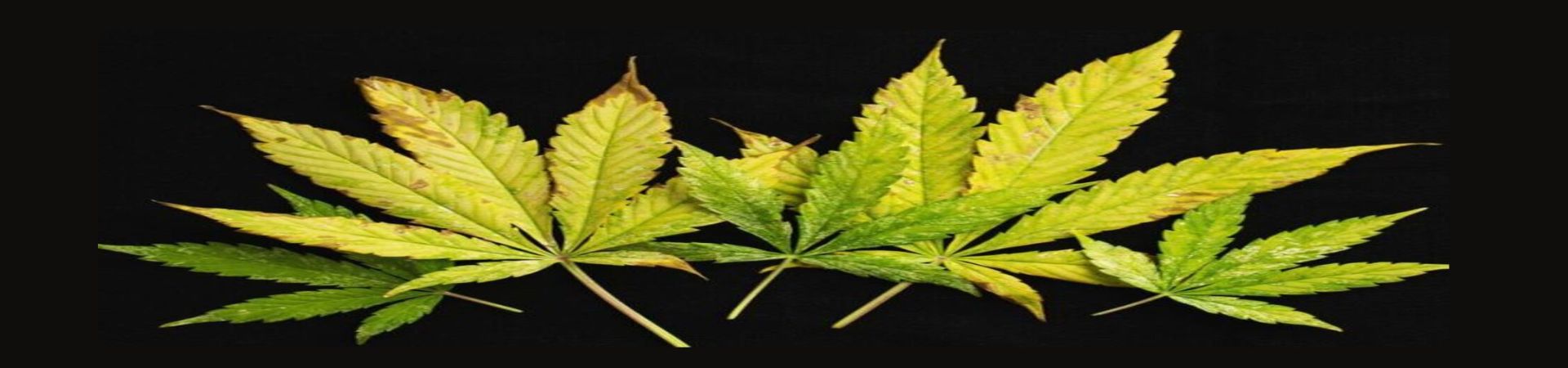
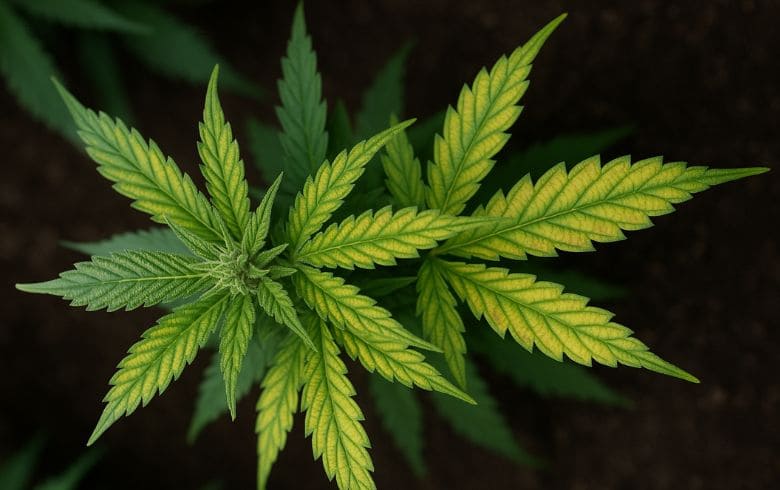
Burns on cannabis leaves are extremely frequent and they can have many different causes. In this article we’re going to go through some of the most common causes of burns on marijuana leaves. any type of stress can lead to these burns. Indeed, any stress cans lead to this problem. Hence, it is important to control the evolution and development of the crop to identify problems and find a solution as soon as possible.
Types of burns on marijuana leaves
Among the different causes of burnt leaves in marijuana plants are the following:
Burns caused by light
One of the most common cases of burn that occurs in cannabis seeds cultivation is that generated by the height of the lamp, when it is at a short distance. For this reason, it is crucial to know how far should grow lights be in indoors cultivations to ensure the appropriate temperature ; whereas depending on the power and the manufacturer, it can vary.
Symptoms indicating burns caused by light:
- When there is an excess of light, yellow discolorations usually appear on both the central leaf and the nearest areas, as it is the part closest to the light.
- The plant lacks energy, so the leaves will be droopy.
- Thus, the bud will acquire a yellowish color, where the hairs will turn brown.
- There is an intense odor that permeates the environment due to the loss of terpenes.
[ppgbo products=”6885,5693,7144″language=”en”]
In the case that the temperature is not too high for the plants to burn, the luminous power of the lighting system used must be taken into account, which may be too high for the plant to absorb everything naturally and without burns appearing. If this happens, the lamp should be raised to twice the distance it had.
Outdoors, this does not usually happen unless the plant is not well hydrated.
Leaves burned due to unhealthy roots
Other burns that appear on marijuana plants are caused by excess watering or nutrients.
Thus, in the case of an excess of nutrients, you will begin to notice burns on the tips of the leaves that turn yellow. To avoid this, it is advisable to have pH and EC meters and to work with quality water. This will ensure that the pH is balanced between 5.5 and 6.5. Likewise, the EC should not exceed 0.6. Likewise, in case it is necessary to combat it, an enzyme complex should be added to the water to eliminate dead roots from the culture medium.
In the case of burns caused by overwatering it is more difficult to identify, although it can be distinguished when the plant shows signs of burning on the leaves and the fertilization regime is being gentle. If the pot has not lost moisture for several days, this may be the cause. It should be noted that the root system will be rotting from excess water, making there a danger of harmful fungi or pests.

If this problem is to be avoided, it is best to control the amount of water applied at each stage of the plant. Ideally, the substrate should be kept moist for a maximum of 1 to 3 days and watered again when the pot has lost half of the weight it had when it was first watered.
By spraying
Many times, plants must be sprayed with foliar fertilizers or with antifungal and insecticide preventives. When spraying, care must be taken with the light as it can cause severe burns on your plants.
To be able to spray them, you have to make sure that a couple of hours later they will not receive excessive light, neither from the sun nor from indoor cultivation lights. If done outdoors, it should be done early in the morning or late in the afternoon.
If done indoors, it should be done just before the lights go out, so that the sprayed parts dry out and no drops remain on the surface.

Leaves burned by the wind
The most unknown of burns is that produced by the fan on the plants. Indeed, a direct air current on the plants can cause burns on marijuana leaves.
Inconsistent airflow can be detrimental to plant health, particularly when it comes to the delicate balance of hydration. Even if the air movement seems gentle, excessive swaying caused by passing fans can lead to quicker water loss than uptake, ultimately resulting in desiccation and leaf loss. This phenomenon often manifests as burns, typically concentrated at the plant’s apex where the fan’s force is strongest, with the nearest plant bearing the brunt of the damage. Look for downward curvature of the plant and scorched leaf edges as telltale signs.
Further, adjusting fan speed or repositioning it can mitigate these burns. Also, in enclosed spaces like cabinets, employing multiple low-power fans proves more effective than relying on a single high-power unit, as it allows for better airflow distribution without overcrowding. Additionally, be careful of potential collisions with objects, as these can cause injuries that may invite infections.
Understanding and distinguishing these common burn types in marijuana cultivation is crucial for prompt and effective intervention.