Personalized attention +34 96 206 62 98
 Free shipping to Iberian Peninsula from 30€
 9/10 Rating
 Discreet shipping


In any indoor growing project, artificial light acts as the main driver of plant growth. Without proper lighting, plants cannot reach their full genetic potential. It is well-established that blue and red lights are the most studied, as they are directly involved in critical biological processes such as vegetative growth and flowering. However, a key question arises: what role does green light play in indoor growing?
At GB The Green Brand, we’ve noticed this recurring question in the grower community. Therefore, in this article, we aim to explain its function, demonstrating that this often underestimated element can be a game-changer that optimizes your harvest results. Understanding Green Light in Indoor Growing is essential for achieving this.
What is green light in indoor growing
When we talk about proper indoor grow lighting, most people immediately think of blue and red spectrums because they are most directly related to plant development. However, within the visible spectrum, green light also exists. At first glance, it may seem less influential, but it actually plays a much more interesting role than often imagined.
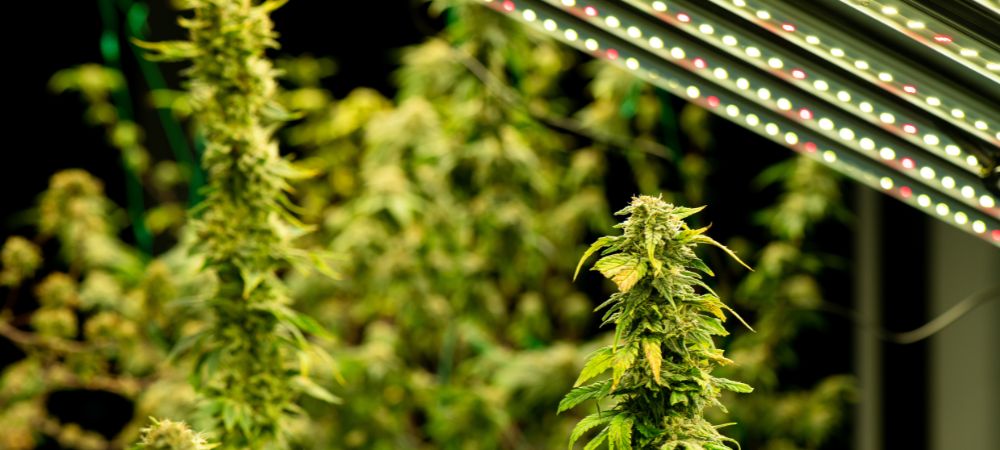
Unlike other lights, green light in indoor growing behaves differently. While much of the blue and red light is absorbed by the upper layers of leaves, green light has the ability to penetrate deeper into the canopy and reach lower parts of the plant that would otherwise remain shaded.
In other words, this light is not meant to cover everything but rather provides a specific nuance that complements the work of other colors. And although plants absorb less green light than red or blue, it doesn’t mean it’s useless—they simply use it differently.
Benefits of green light in indoor growing
Green light in indoor growing may seem minor within the spectrum, but in practice, it offers advantages that improve both plant development and the grower’s experience. Some of the most notable benefits include:
- Increased overall yield: By reaching lower areas of the canopy that typically remain dark, green light allows plants to utilize more surface for photosynthesis. The result is usually more balanced and productive growth.
- Reduced light stress for plants: Adding green light to the spectrum helps soften overall intensity and reduces the impact of very strong lights. This is reflected in healthier-looking leaves and a more stable growth cycle.
- Facilitates the grower’s work: During the night phase, you can inspect, water, or prune without interrupting the plants’ rest. Green light gives you the flexibility to act when needed without altering the cycle.
- Improved plant aesthetics: While this may seem secondary, observing plants under green light highlights their natural and healthy appearance. Many growers agree that visual perception is clearer, making it easier to detect potential problems in time.
Difference between green light and other colors in indoor growing
When discussing lighting, each color in the spectrum has a distinct function. Understanding these differences is key to designing a truly efficient lighting system. Let’s see how green light in indoor growing compares to other commonly used colors.
| Light Color | Primary Function | Role in Indoor Growing | Relation to Green Light |
|---|---|---|---|
| Blue Light | Stimulates vegetative growth, compact leaves, and chlorophyll production. | Essential during the growth phase. | Green light complements by penetrating deeper into the canopy and balancing development in lower areas. |
| Red Light | Promotes flowering and fruit/flower production. | Crucial during the flowering stage. | Green light does not induce flowering but helps distribute light more evenly and increases red light efficiency. |
| White Light | Provides a full spectrum similar to sunlight. | Useful throughout all growth phases. | Green light adds balance, deeper penetration, and allows work during the night phase without disrupting the cycle. |
When and how to use green light in indoor growing
Knowing what green light contributes in indoor cultivation is useful, but the real benefit comes from understanding when it is best applied and how to make the most of it. It’s not just about turning it on; it’s about incorporating it intentionally to improve crop performance and make the grower’s work easier. Understanding green light used for in indoor growing can make a real difference in your results.
Growth stages where it is most beneficial
While green light can be present throughout the growth cycle, it is especially helpful in two situations:
- During the vegetative stage, as it helps light reach lower leaves and the interior of the plant, promoting more uniform growth.
- During the night phase, when the main lights are off. Here, green light doesn’t act directly on the plant but on the grower, allowing work without interrupting the plants’ natural rest.
How to choose LEDs with green spectrum
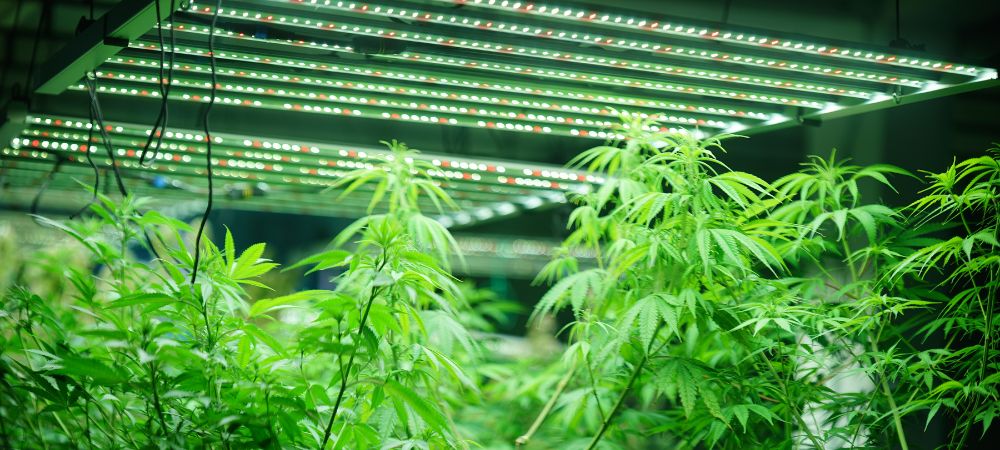
Today, most full-spectrum LEDs already include a portion of green light in their design. However, it’s important to check technical specifications: not all bulbs provide the same balance of blue, red, and green. At GB The Green Brand, we typically recommend high-quality full-spectrum LED fixtures so the plant receives all necessary colors without needing additional lights. Learning about green light used for in indoor growing ensures you maximize your plant’s growth potential.
Practical tips to make the most of it
Now that we understand how green light interacts with indoor cannabis plants, it’s time to put theory into practice. The key is to use green light as a strategic and complementary tool that benefits both your plants and yourself. Here are the best tips for integrating it intelligently into your grow space:
- Use green light as a support, not a replacement for blue or red light.
- If working in the grow room during the night phase, keep the green light intensity moderate—enough to see clearly but not excessively bright.
- Ensure the green light is evenly distributed to cover the grow area, not just a single spot.
- Complement its use with good cultivation practices: proper ventilation, balanced nutrition, and photoperiod control.
To enhance your indoor growing setup, consider full-spectrum lighting options that include green light. At GB The Green Brand, you’ll find everything you need at the best price. Understanding green light used for in indoor growing will improve your crop—and your experience as a grower.