Personalized attention +34 96 206 62 98
 Free shipping to Iberian Peninsula from 30€
 9/10 Rating
 Discreet shipping


Indoor cannabis cultivation has experienced a significant upgrade with the arrival of LED indoor grow lights, gradually surpassing traditional HPS and CMH systems. However, simply installing an LED panel is not enough to expect spectacular results: improper handling can lead to serious issues in plant development, ranging from nutrient deficiencies to the dreaded indoor light stress. In this article, you will find a clear and practical guide to recognize the most common LED indoor grow mistakes and learn how to avoid them, allowing you to harness the full potential of this lighting and achieve higher-quality harvests.
Why choose LED Indoor grow lights for cannabis cultivation?
LED indoor grow lights have become the preferred choice for many growers due to their multiple advantages over traditional systems. Their energy efficiency helps reduce electricity costs while providing light that is more effective for photosynthesis. Additionally, they feature adjustable spectra, making it easier to tailor the lighting to each stage of growth, from vegetative to flowering. Another advantage is their lower heat output, which helps maintain a stable indoor climate and reduces the risk of heat stress on the plants.
Compared to HPS or other discharge lamps, LEDs offer longer lifespan and require less maintenance, making them a smart long-term investment. However, these advantages alone do not guarantee results: the key is learning how to use them correctly. Many common problems with LED cultivation—such as excessive indoor light or improper distance adjustment—stem from a lack of understanding of how these lights work.
Mastering this technology is essential to avoid mistakes and maximize its potential for producing high-quality buds.
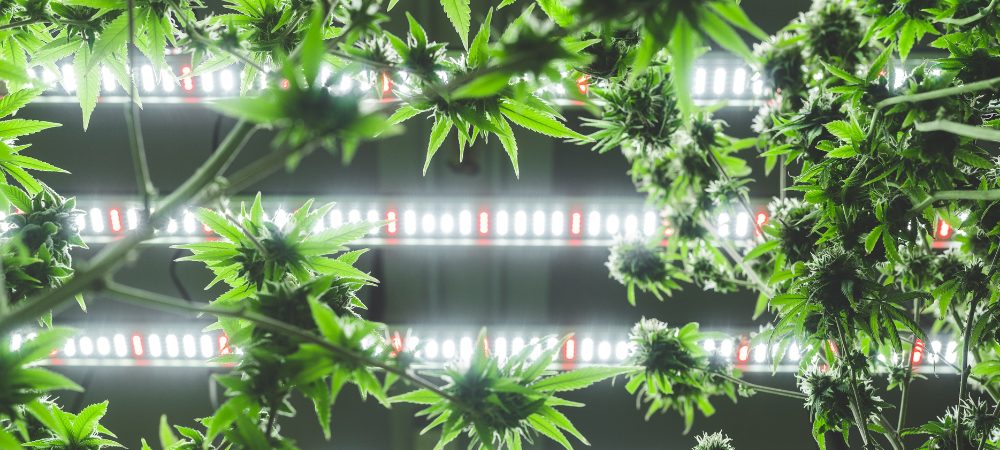
Common LED Indoor grow mistakes
Most issues that growers encounter when working with LED indoor lights are not caused by the equipment itself but by a lack of adaptation to this technology. Unlike HPS or CMH systems, LEDs require specific management in terms of intensity, spectrum, and distance. Failing to properly adjust these factors can result in anything from excessive indoor light to stunted growth, reducing the harvest’s potential.
Excessive indoor light and light stress
One of the most common mistakes is assuming that “more light is better,” when in fact excessive indoor light can severely damage plants. Too much intensity causes light stress, leading to burned leaves, dry edges, reduced photosynthesis, and even sparse buds. Visible symptoms include:
- Top leaves that curl upwards.
- Burned or bleached tips.
- Stunted growth in shoots closest to the light.
To prevent this, it is recommended to measure light intensity using a PAR meter (photosynthetically active radiation) or, alternatively, a lux meter. These tools allow you to adjust the distance of your LED indoor grow lights and ensure plants receive adequate light without causing stress.
Incorrect LED indoor light distance
Another frequent mistake involves the height at which LED indoor lights are placed. If the lights are too close, they cause burns and stress; if too far, plants tend to stretch excessively toward the light, weakening their stems.
Still, each model can vary, so it is always advisable to follow the manufacturer’s instructions and observe the plants’ response to adjust the setup accurately.
Not adjusting the light spectrum
LED lights for cannabis cultivation offer the advantage of adjustable spectra, yet many growers forget to change the settings. During the vegetative stage, a blue spectrum promotes compact branch and leaf growth, while during flowering, a warmer, red-dominant spectrum encourages flower production.
Failing to switch the spectrum at the right time can result in lanky plants, irregular flowering, and less resinous buds.
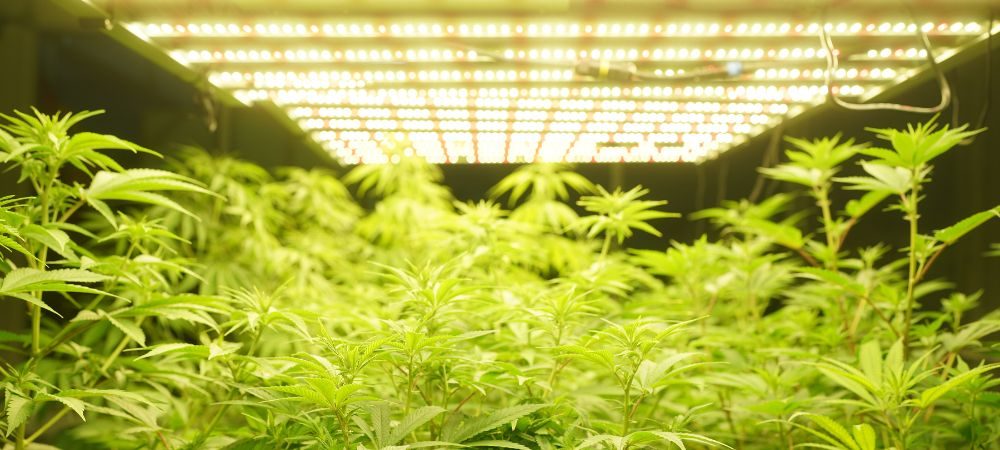
Neglecting climate control when using LED indoor lights
An often overlooked mistake is that when using LEDs, the grow room temperature can drop too low. Unlike HPS lamps, which generate a lot of heat, LED indoor grow lights emit very little. This is an advantage during summer, but in winter it can cause temperatures that are too low, slowing down the plant’s metabolism.
The solution involves adjusting ventilation, using heaters if necessary, and maintaining optimal relative humidity for each stage of growth.
Choosing the wrong LED Panel
Not all LED panels are created equal. Selecting low-quality models often results in poor yields and durability issues. Additionally, many growers miscalculate the area to be illuminated. A 200 W panel will not efficiently cover a full square meter, even if the manufacturer claims it does.
The recommendation is to choose reputable brands, calculate the actual grow area, and adjust the power based on the square footage to be illuminated.
[ppgbo products=”8353,8456,5161″ language=”en”]
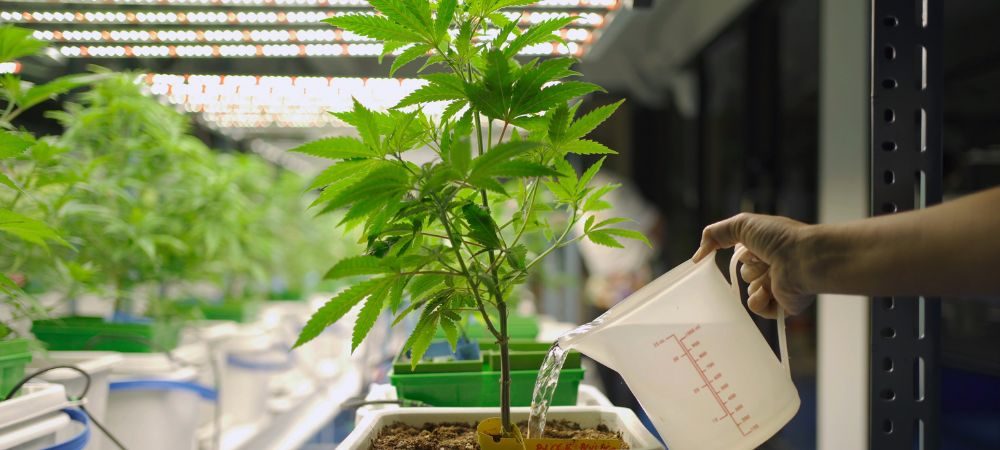
Watering Issues under LED Lights
When using LED indoor grow lights, water evaporation from the substrate is lower than with HPS or CMH lamps, since they produce much less heat. This often leads to a classic mistake: watering at the same frequency as before, resulting in overwatering.
Excess water in the substrate prevents roots from breathing properly, encourages fungal growth, and slows cannabis plant development. To avoid this, always check the weight of the pots before watering and adjust the frequency based on actual absorption.
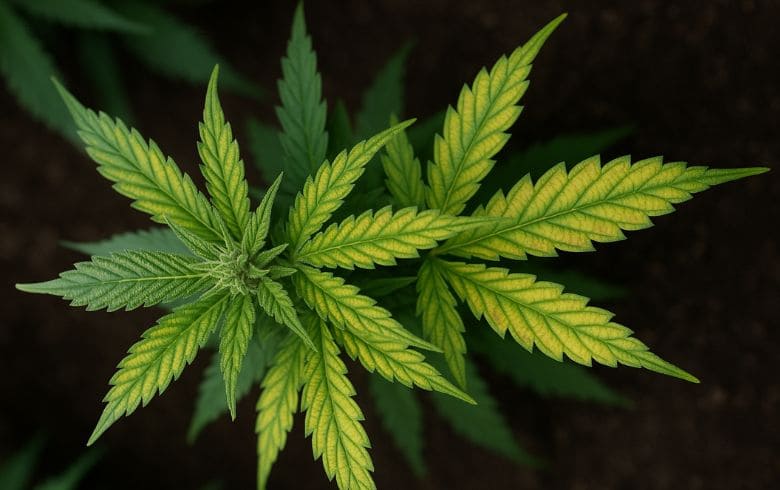
Calcium and Magnesium deficiencies
Another common issue in cannabis cultivation under LED lights is calcium (Ca) and magnesium (Mg) deficiencies. This happens because the intensity and spectrum of some LED panels increase the demand for these nutrients, especially during flowering.
Typical symptoms include brown spots on leaves, yellowing edges, and slowed growth. To address this, it is recommended to use quality Ca/Mg-specific fertilizers in the irrigation, or for mild cases, apply a foliar spray solution. Additionally, checking the water pH is important, as incorrect values can block the absorption of these essential minerals.
How to avoid LED indoor grow mistakes
Growing cannabis with LED indoor lights can yield spectacular results, but only if the cultivation method is adapted to this technology. Many problems can be avoided with a few basic adjustments and measurement tools.
- Use PAR meters and adjust height: Knowing how much light your plants receive is key to preventing light stress or excessive stretching. Adjust the LED distance according to growth stage and panel power.
- Control watering and nutrients precisely: Under LED, evaporation is lower, so space out watering and monitor that roots are not waterlogged. Also, adjust nutrients to avoid calcium or magnesium deficiencies.
- Adjust light spectra for each stage: The vegetative stage requires more blue light, while flowering benefits from red. Changing the spectrum at the right time maximizes bud growth and yield.
- Monitor climate and correct with fans, humidifiers, or heaters: Even though LEDs produce less heat, temperature and humidity remain crucial. Maintain a stable environment for optimal plant performance.
- Choose quality LEDs: Professional panels like Lumatek or other trusted brands ensure precise spectra, energy efficiency, and durability, preventing common issues with low-quality lights.
[ppgbo products=”6704,8318,8440″ language=”en”]
With these tips, you will not only minimize common LED indoor grow mistakes but also get the most out of your lights, improving your plants’ health and productivity. Have questions? We’d love to hear from you in the comments!