Personalized attention +34 96 206 62 98
 Free shipping to Iberian Peninsula from 30€
 9/10 Rating
 Discreet shipping


Psilocybin microdosing has become an increasingly popular practice among those looking to enhance mental well-being, boost creativity, or increase productivity. This technique—which involves taking sub-perceptual doses of psychoactive mushrooms—requires planning, consistency, and knowledge to be truly effective.
In this article, we analyze the main microdosing protocols, their differences, and how to apply them safely, so you can make informed decisions if you decide to explore this practice.
What are microdosing protocols and why follow one?
Microdosing means taking very small amounts of a psychedelic substance—typically between 5% and 10% of a recreational dose—with the intention of obtaining subtle benefits without experiencing obvious psychedelic effects. In the case of psilocybin, people usually microdose with dried Psilocybe mushrooms.
But it’s not just about taking less. The key is structured repetition and mindful tracking, which is why following a microdosing protocol is crucial: it lets you observe effects, adjust dosage, prevent tolerance build-up, and assess whether you’re actually experiencing improvements.

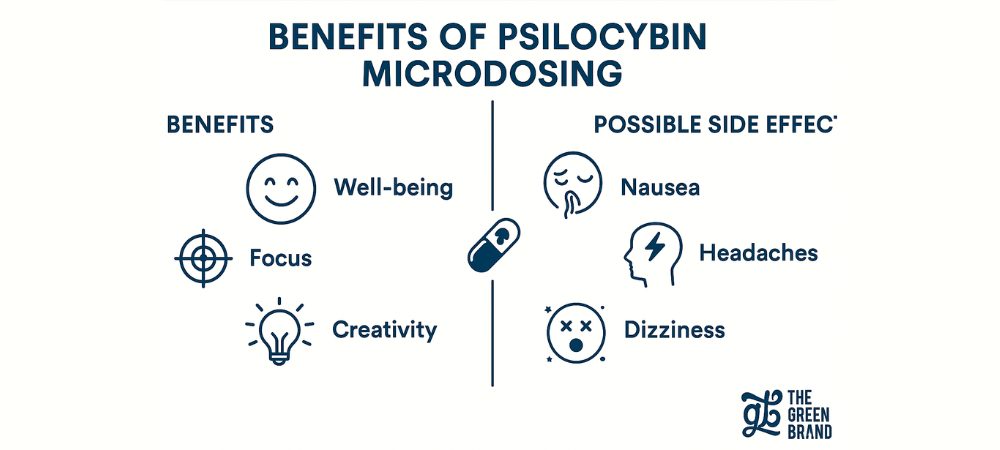
Psilocybin, found in over 180 mushroom species, may offer several benefits for the body such as improved mood, mental clarity, creativity, and introspection when microdosed. However, it can also lead to tolerance or side effects like insomnia and nervousness, and is not recommended for individuals with a history of psychotic disorders.
Most well-known microdosing protocols
Various researchers and communities have proposed microdosing protocols to structure the practice and maximize benefits. Here are the most popular:
Fadiman protocol
The most famous and widely used microdosing protocol is undoubtedly the one developed by psychologist James Fadiman. His approach is simple: take a microdose one day, then rest for the next two days, making each full cycle three days long.
According to Fadiman, this schedule lets your body process residual effects on the second day—when many users report a state of mental clarity or “glow”—and fully rest on the third day, thus avoiding psilocybin tolerance build-up.
This method is especially helpful for beginners or anyone seeking a gradual, self-exploratory approach focused on emotional well-being and overall health. Its simplicity and effectiveness make it a safe choice for those who want to introduce microdosing into their routine without disrupting daily life.
1 / 1 Protocol
The 1 / 1 Protocol is a more intensive microdosing protocol that alternates consumption and rest days in a strict 48-hour rhythm: take a microdose every other day. Many users prefer this when they want a more consistent stimulation pattern—for example, to sustain creative flow, sharpen intellectual tasks, or navigate high-pressure work periods.
However, this higher frequency carries a greater risk of tolerance if longer breaks aren’t inserted after several weeks of continuous use. While effective in the short term—especially for pronounced effects—it’s advisable to periodically reassess outcomes and overall mood.
2 days per week protocol
For those who want a regular microdosing protocol without overhauling their weekly schedule, the “2 Days Per Week” approach offers flexibility—for instance, dosing on Mondays and Thursdays. This setup is easy to fit into work or school routines, delivering benefits without interfering with everyday commitments.
Although cumulative effects may develop more slowly than with more frequent protocols, many find this pattern supports long-term adherence, fostering a balanced, sustainable experience. It’s perfect for maintaining mental clarity, focus, and emotional balance without sacrificing responsibilities.
Stamets protocol
The Stamets Protocol—named after mycologist Paul Stamets—is one of the more advanced microdosing protocols. It combines psilocybin with two synergistic elements: Lion’s Mane mushroom (Hericium erinaceus), known for its neurogenic effects, and niacin (vitamin B3), which aids cerebral uptake of active compounds.
This protocol calls for five consecutive days of microdosing followed by two days off, repeated over multiple weeks.
The goal is to stimulate neuroregeneration, enhance synaptic plasticity, and support overall cognitive health. Due to its complexity and need for precise preparation and monitoring, it’s generally recommended for experienced users or those pursuing specific therapeutic outcomes.
Intuitive microdosing
Intuitive Microdosing is the least structured protocol: dosing isn’t on a fixed schedule but rather driven by the user’s own needs, moods, or goals. This flexibility lets you microdose at times when you specifically want enhanced clarity, introspection, or emotional regulation.
However, the lack of consistent tracking and control makes it harder to objectively assess effects and increases the risk of inefficient or counterproductive use. As such, it’s generally advised only for advanced practitioners with strong self-awareness and discipline.
| Protocol | Frequency | Main Objective | Recommended Experience | Advantages | Considerations |
|---|---|---|---|---|---|
| Fadiman | 1 day on, 2 days off | Emotional wellness, self-exploration | Beginner | Easy to follow, prevents tolerance | Slower cumulative effects |
| 1 / 1 | Every other day | Creativity, productivity | Intermediate | Frequent stimulation, short-term cycles | Tolerance risk if prolonged |
| 2 Days/Week | e.g., Mon & Thu | Work/school compatibility | Beginner/Intermediate | Flexible, consistent adherence | Milder effects |
| Stamets | 5 days on, 2 days off | Neuroregeneration, cognitive health | Advanced | Neurogenic potential, holistic | Complex, requires monitoring |
| Intuitive | As needed | Emotional/energy regulation | Advanced | Maximum flexibility | Hard to track, not for novices |
How to safely apply a microdosing protocol: step-by-step guide
Before starting microdosing protocols, it’s essential to follow a series of steps that will help you practice safely, maintain control, and tailor the experience to your personal needs.
Choose your protocol
The first step is to select the microdosing protocol that best fits your lifestyle and goals. There’s no one-size-fits-all approach: some people seek mental clarity or focus, while others aim for greater emotional stability or deeper introspection.
The Fadiman Protocol is an excellent choice for beginners due to its moderate pace and simple structure. If you have prior experience or want more consistent effects, you might consider alternatives like the Stamets Protocol or the 2 Days Per Week approach.
Calculate the right dose
When it comes to microdosing, less is more. Your dose should be low enough not to alter your perception of reality, yet effective enough to produce subtle, positive changes in mood, focus, or energy.
For Psilocybe cubensis, the most common variety, a standard microdose ranges from 0.1 g to 0.3 g of dried mushrooms. Individual needs vary, so start at the lower end and adjust as necessary.

Prepare your microdose
Encapsulation is the most common way to consume a microdose, offering control, discretion, and convenience. Grind the mushrooms finely into a uniform powder, then fill vegetarian capsules with the desired amount.
Alternatively, you can dissolve your microdose in water with a few drops of lemon juice, which helps convert psilocybin to psilocin for faster, smoother absorption.
[ppgbo products=”8229,7757,1601″ language=”en”]
Keep a tracking journal
Maintaining a journal is crucial for evaluating the effectiveness of your chosen protocol and for fine-tuning your dose or schedule. You might record:
- Date and time of each dose
- Exact dosage
- Mood before and after
- Changes in focus, productivity, or energy
- Sleep patterns, appetite, or other physiological effects
This journal helps you spot patterns and make informed adjustments. Even subtle changes become clearer when tracked over time.
Respect rest days
One key principle of microdosing is avoiding tolerance. Continuous daily use can lead your body to adapt, reducing positive effects and potentially fostering psychological dependence.
Therefore, even with more frequent protocols like Stamets or the 1 / 1 approach, it’s wise to schedule weekly or monthly breaks of 7–14 days. These pauses allow your nervous system to reset and support long-term benefits.
Which microdosing protocol should you choose based on your goals?
Choosing the right microdosing protocol largely depends on your personal objective: are you aiming to boost emotional well-being? Stimulate creativity? Or perhaps promote neuroplasticity? Each protocol offers distinct advantages, so aligning your choice with your lifestyle and goals is essential for a safe, effective experience.
| Goal | Recommended Protocol | Notes |
|---|---|---|
| Improve emotional well-being | Fadiman | Gentle, progressive effects |
| Creativity & productivity | 1 / 1 or 2 Days/Week | Work/study-friendly |
| Neuroplasticity & memory | Stamets | Combined with Lion’s Mane |
| Mindful self-exploration | Fadiman or Intuitive | Requires self-awareness |
If you want to delve deeper into this practice, we recommend the book The Microdosing Guide (Oberon, 2024). Written by C.J. Spotswood—a psychiatric nurse with over 20 years of clinical experience—this manual combines scientific rigor and practical application, making it essential reading for anyone exploring microdosing protocols.
[ppgbo product=”8199″ language=”en”]
Frequently asked questions about microdosing protocols
What exact dose is considered a psilocybin microdose?
A psilocybin microdose typically ranges between 0.1 g and 0.3 g of dried mushrooms. The exact amount can vary based on species, body weight, and individual tolerance.
How long does a microdosing protocol last?
Protocols are usually followed for 4 to 8 weeks. Afterward, it’s recommended to take a break to evaluate results and avoid tolerance.
Can I work or study while microdosing?
Yes. Most microdosing protocols are designed to be compatible with daily routines, allowing you to work or study without noticeable disruptions.
Can I combine microdoses with caffeine or CBD?
No dangerous interactions have been reported between psilocybin microdoses and substances like caffeine or CBD. However, it’s best to start without combinations to assess individual effects first.
How long does it take to feel the effects of a microdose?
Some users notice subtle effects within the first week, while others perceive benefits only after several sessions accumulate. Experiences vary by protocol and individual.