Personalized attention +34 96 206 62 98
 Free shipping to Iberian Peninsula from 30€
 9/10 Rating
 Discreet shipping


Interest in new cultivation techniques has been steadily growing in recent years, and one of the methods that generates the most curiosity is liquid cultivation. But what exactly is liquid cultivation? It is a method mainly used in mycology and biotechnology, where fungi or microorganisms develop in sterile nutrient solutions instead of on solid substrates.
More and more growers are incorporating it into their processes, both at home and in laboratories, because it delivers fast and reliable results. In this guide, you will explore in detail how it works, what its advantages are, and the basic steps you need to know to start applying it successfully.
What is liquid cultivation and how does it work?
Liquid cultivation, or liquid culture of mushrooms, is a mycological propagation method that consists of growing mycelium inside a sterile nutrient solution. Unlike traditional methods, where spores are inoculated on agar or pre-prepared mushroom grow kits, liquid cultivation of fungi allows for faster and more uniform development, since the mycelium immediately finds the nutrients it needs to expand.
The main difference between liquid cultivation and solid media such as agar lies in the speed and ease of multiplying the mycelium. While with a mushroom grow kit or spores the process may take several weeks, with a mushroom liquid culture it is possible to obtain an active mycelial network ready for inoculation in much less time.
In this system, the role of mycelium is essential: it is the living organism that colonizes the solution and converts nutrients into a growth base. The stronger and healthier this mycelium is, the greater the ability to achieve productive, stable, and contamination-resistant crops.
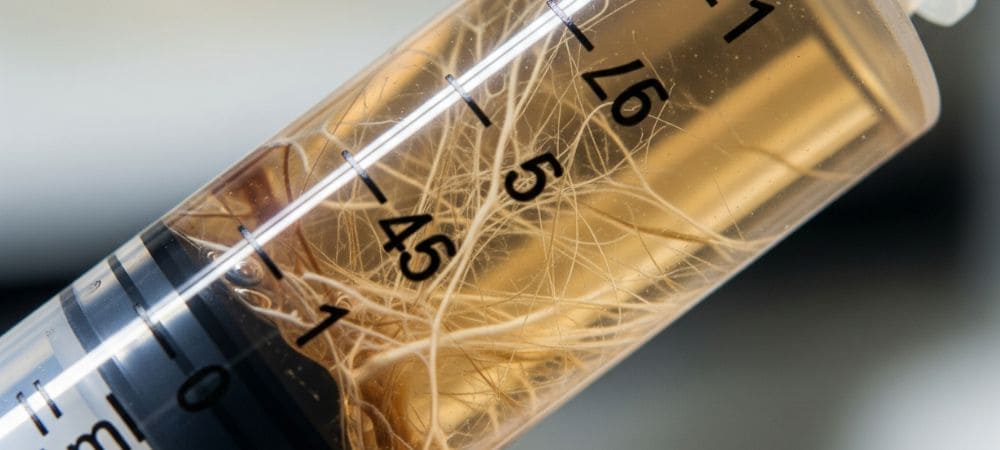
Advantages of liquid cultivation in mushroom growing
The mycelium liquid culture has become one of the most popular techniques in mycology thanks to the multiple benefits it offers compared to more traditional methods. It not only speeds up the colonization process, but also provides safety, efficiency, and versatility, making it attractive for both beginners and experienced growers. The main advantages of liquid cultivation are:
- Faster colonization: mycelium develops more quickly when in direct contact with nutrients.
- Lower risk of contamination: when working in a sterile liquid medium, the chances of contamination decrease if good hygiene practices are maintained.
- Cost-effectiveness: a single liquid cultivation can inoculate multiple substrates, maximizing yield with fewer resources.
- Ideal for beginners and experts: it is a flexible method, easy to handle, and at the same time useful for advanced projects.
- Large-scale production: it allows you to expand mycelium in large volumes, facilitating continuous and efficient production.
Possible risks
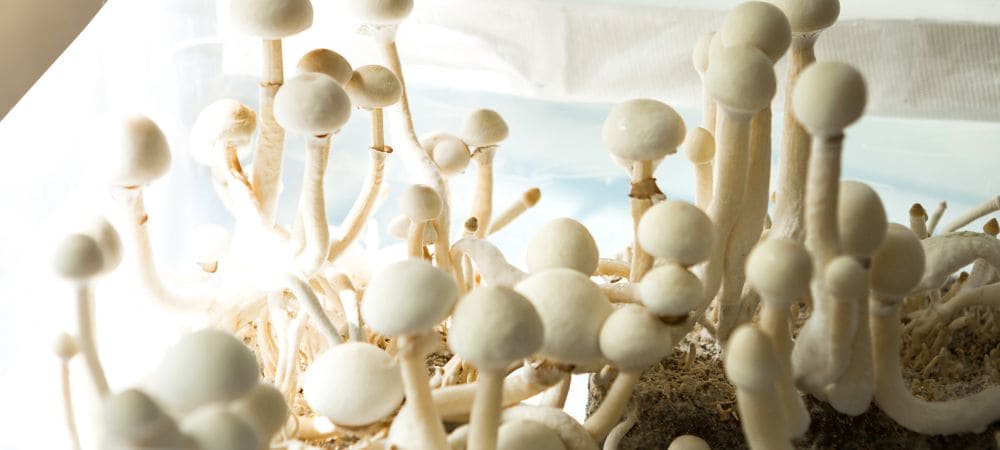
Although this cultivation method offers major advantages, it is also important to consider some risks that can arise if the techniques are not applied correctly. The most common ones are:
- Possible contamination if not properly sterilized: any mistake in sterilizing the medium or equipment can lead to contamination that ruins the process.
- Need for proper equipment: working with liquid cultivation requires sterile syringes, special jars, and the cleanest environment possible, which implies an initial investment.
- Not always recommended for starting from scratch: ideally, you should use it starting from psilocybe mushroom spores or viable mycelium; starting without prior experience can complicate the process.
| Step | Description |
|---|---|
| Material preparation | Gather sterile jars, syringes, gloves, a mask, and a clean working surface. |
| Syringe sterilization and shaking | Sterilize the syringe with heat or alcohol and shake the liquid culture jar to evenly distribute the mycelium. |
| Substrate inoculation | Use the syringe to inject a controlled amount of liquid cultivation into the pre-prepared sterile substrate. |
| Optimal temperature and humidity | Keep the substrate in a warm and humid environment (between 72 °F and 81 °F) to promote mycelium growth. |
How to properly store a liquid cultivation
A mushroom liquid cultivation can remain viable for several months if stored under the right conditions. Proper storage prevents contamination and ensures that the mycelium maintains its vitality for future inoculations.
- Refrigeration and recommended temperatures: keep the jars in the fridge, ideally between 36 °F and 43 °F (2 °C – 6 °C), avoiding sudden fluctuations.
- Use of airtight and sterile containers: always use glass jars or sealed containers, previously sterilized, to prevent the entry of external agents.
- Shelf life of liquid mycelium: under optimal conditions, it can be preserved for 2 to 6 months, although quality decreases over time.
- Practical tips to extend its duration: label each jar with the preparation date, avoid opening them unnecessarily, and gently shake them from time to time to keep the mycelium in suspension.
Legality in Spain and other countries
The legality of mushroom liquid cultivation depends on the type of mushroom and local legislation. In Spain, growing non-psychoactive mushrooms such as reishi or lion’s mane is completely legal for personal or commercial use. However, cultivating species that contain psilocybin is restricted. Psilocybin is a controlled substance under Spanish law, and its production or possession for illicit purposes may be sanctioned administratively or criminally, depending on the circumstances.
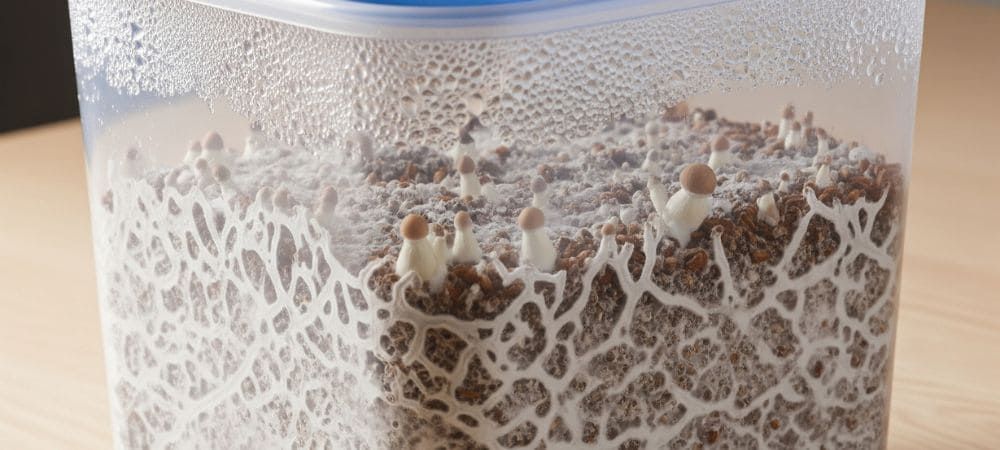
In other countries, regulations vary. In the United States, psilocybin is illegal at the federal level, although some states and cities have decriminalized its use and cultivation for personal consumption. On the other hand, the legality of spores and active mycelium is not uniform, as some jurisdictions prohibit mycelium for containing the psychoactive compound, while others even restrict spores. In countries such as Brazil, legislation focuses on the chemical substance itself, which may create regulatory “gray areas” for the cultivation of mushrooms that contain it.