 Atencion Personalizada 96 206 62 98
 ENVÍO DISCRETO | GRATIS EN PENÍNSULA DESDE 30€
 9/10 Valoración
 PROHIBIDA LA VENTA A MENORES


El jabón potásico se ha convertido en uno de los productos más populares en la jardinería ecológica gracias a su eficacia contra plagas y su bajo impacto ambiental. Sin embargo, como cualquier producto químico, su uso incorrecto o la mezcla con otros compuestos puede generar efectos adversos en tus cultivos. En este artículo, te explicamos las incompatibilidades del jabón potásico, cómo usarlo correctamente y qué precauciones debes tomar para evitar daños en tus plantas. Además, te brindaremos consejos prácticos y ejemplos reales para que puedas aprovechar al máximo este recurso sin poner en riesgo tu huerto.
¿Qué es exactamente el jabón potásico?
El jabón potásico es un producto natural obtenido a través de la saponificación de aceites vegetales (como el de oliva, girasol o coco) con hidróxido de potasio. A diferencia del jabón común (hecho con sodio), el jabón potásico es más suave y se disuelve fácilmente en agua, lo que lo hace ideal para aplicaciones agrícolas. Su principal función es actuar como insecticida y fungicida, eliminando plagas como pulgones, ácaros y cochinillas, así como previniendo enfermedades fúngicas como el mildiu y el oídio.
Además, es biodegradable y no deja residuos tóxicos en los cultivos, lo que lo convierte en una opción preferida para quienes practican la agricultura ecológica. Sin embargo, su eficacia depende en gran medida de cómo se utilice y de las combinaciones que se eviten.
Usos del jabón potásico en jardinería y agricultura
El jabón potásico es una herramienta versátil y eficaz que se ha ganado un lugar destacado en la jardinería y la agricultura ecológica. Su capacidad para combatir plagas y enfermedades sin dañar el medio ambiente lo convierte en una opción ideal para quienes buscan soluciones sostenibles. A continuación, exploramos sus principales usos, beneficios y cómo aplicarlo correctamente para obtener los mejores resultados.
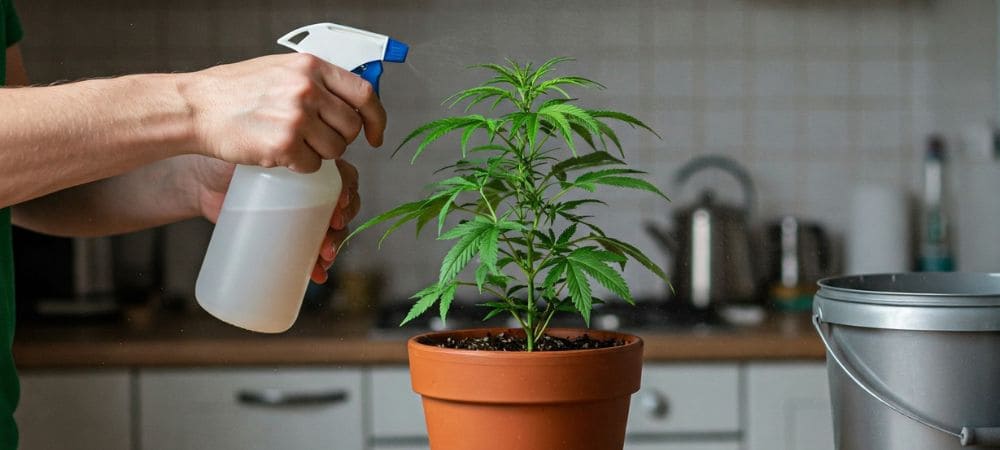
Beneficios del uso del jabón potásico
El jabón potásico no solo es efectivo, sino que también ofrece una serie de ventajas que lo diferencian de otros productos químicos. Aquí te contamos por qué es una excelente opción para el cuidado de tus plantas de marihuana.
- Control de plagas. Es especialmente eficaz contra insectos de cuerpo blando como pulgones, ácaros, moscas blancas y cochinillas. Actúa disolviendo la capa protectora de estos insectos, causando su deshidratación y muerte.
- Prevención de enfermedades fúngicas. Ayuda a combatir hongos como el mildiu y el oídio, especialmente cuando se aplica de manera preventiva.
- Respetuoso con el medio ambiente. Al ser biodegradable y no tóxico, no contamina el suelo ni afecta a insectos beneficiosos como las abejas.
- Fácil de aplicar. Se diluye en agua y puede aplicarse con un pulverizador común, lo que lo hace accesible incluso para principiantes.
¿Cómo se aplica el jabón potásico?
Para aprovechar al máximo las propiedades del jabón potásico, es fundamental aplicarlo de manera correcta. Aquí te explicamos paso a paso cómo hacerlo:
- Dilución. La concentración recomendada es del 1-2% (10-20 ml de jabón potásico por litro de agua). Esta proporción garantiza eficacia sin riesgo de dañar las plantas.
- Aplicación. Usa un pulverizador para cubrir bien las hojas, especialmente el envés, donde suelen esconderse las plagas. Asegúrate de que la solución llegue a todas las áreas afectadas.
- Momento de aplicación. Es preferible aplicarlo en las primeras horas de la mañana o al atardecer. Esto evita la evaporación rápida y reduce el riesgo de quemaduras solares en las hojas.
- Frecuencia. Aplica cada 7-10 días, dependiendo de la gravedad de la infestación. En casos severos, puedes aumentar la frecuencia, pero siempre respetando las dosis recomendadas.
| Paso | Descripción | Detalles |
|---|---|---|
| Dilución | Mezcla el jabón potásico con agua. | Concentración recomendada: 1-2% (10-20 ml por litro de agua). |
| Aplicación | Pulveriza la solución sobre las plantas. | Cubre bien las hojas, especialmente el envés, para alcanzar las plagas. |
| Momento de aplicación | Elige el momento adecuado del día. | Preferiblemente temprano en la mañana o al atardecer para evitar la evaporación rápida y quemaduras solares. |
| Frecuencia | Determina la frecuencia de aplicación. | Cada 7-10 días, ajustando según la gravedad de la infestación. |
Cómo fabricar jabón potásico casero
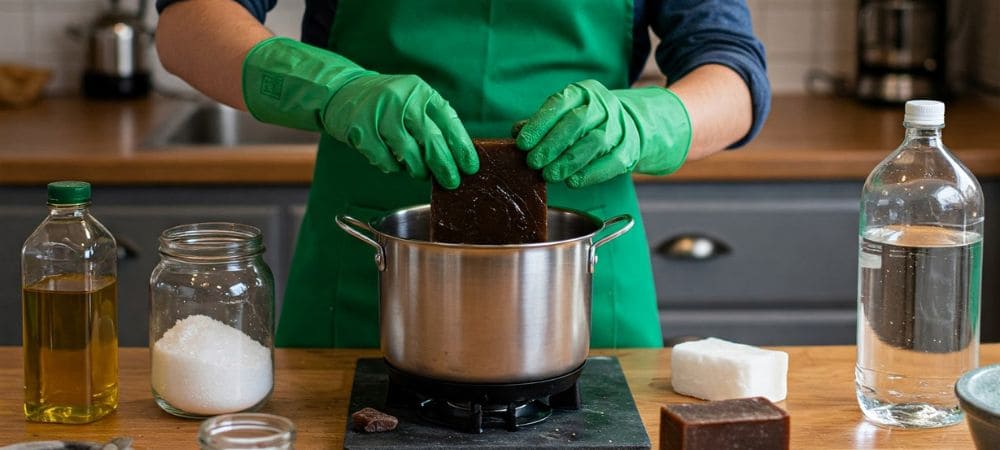
Si prefieres una opción más económica y personalizada, puedes fabricar tu propio producto. No es difícil, pero necesitas algún ingrediente muy específico. Aquí te explicamos cómo hacer jabón potásico casero.
Ingredientes:
- 1 litro de aceite vegetal (oliva, girasol o coco).
- 140 g de hidróxido de potasio (se consigue en tiendas especializadas).
- 1 litro de agua destilada.
Proceso:
- Usa guantes y gafas de protección. En un recipiente resistente al calor, disuelve el hidróxido de potasio en el agua. Esta mezcla liberará calor, así que ten cuidado.
- Añade el aceite vegetal y calienta la mezcla a 60°C, removiendo constantemente hasta obtener una pasta homogénea.
- Deja reposar la mezcla durante 24 horas. Si queda muy espesa, añade un poco más de agua.
- Guarda el jabón en un recipiente hermético y etiquétalo correctamente.
- Almacénalo en un lugar fresco y seco, lejos de la luz solar directa.
Incompatibilidades del jabón potásico
El jabón potásico es un producto altamente efectivo en el control de plagas y enfermedades, pero su eficacia puede verse comprometida si se mezcla con otros productos químicos. Conocer sus incompatibilidades es fundamental para evitar daños en tus plantas y garantizar que cumpla su función correctamente.
Productos con pH alto
El jabón potásico es un producto que funciona mejor en un pH ligeramente alcalino (alrededor de 8-9). Sin embargo, cuando se mezcla con productos de pH muy alto (superior a 9), se pueden generar reacciones químicas que reducen su eficacia o provocar fitotoxicidad en las plantas.
Algunos productos con pH alto contienen componentes químicos que reaccionan especialmente mal con el jabón potásico. Por ejemplo, los hidróxidos (como el hidróxido de sodio o potasio) pueden generar una reacción exotérmica (liberación de calor) al mezclarse con el jabón, lo que podría dañar las plantas
Pesticidas químicos
Los pesticidas químicos son uno de los productos más incompatibles con el jabón potásico. Esto se debe a que el jabón potásico tiene un pH ligeramente alcalino (alrededor de 8-9), mientras que muchos pesticidas químicos están formulados para funcionar en un pH neutro o ligeramente ácido. Cuando se mezclan, el pH del jabón puede alterar la composición química de los pesticidas, neutralizando su efecto. Además, los pesticidas químicos suelen contener ingredientes activos que pueden reaccionar con los componentes del jabón potásico, reduciendo su eficacia contra las plagas.
Algunos ejemplos de pesticidas químicos incompatibles incluyen los piretroides (como la cipermetrina o la deltametrina), los organofosforados (como el malatión o el clorpirifos) y los neonicotinoides (como el imidacloprid o el tiametoxam).
Fungicidas sistémicos
Los fungicidas sistémicos están diseñados para penetrar en los tejidos de la planta y combatir hongos desde el interior. Sin embargo, el jabón potásico actúa de manera superficial, formando una capa sobre las hojas. Cuando se mezclan, el jabón puede interferir con la absorción del fungicida, reduciendo su eficacia. Además, la combinación puede generar fitotoxicidad, especialmente en plantas sensibles, causando quemaduras en las hojas y tallos.
Algunos ejemplos de fungicidas sistémicos incompatibles incluyen los triazoles (como el tebuconazol o el propiconazol), las estrobilurinas (como la azoxistrobina o la trifloxistrobina) y los benzimidazoles (como el benomilo o el carbendazim).
Fertilizantes foliares
Los fertilizantes foliares están diseñados para ser absorbidos directamente por las hojas, pero su mezcla con jabón potásico puede causar fitotoxicidad. Esto se debe a que el jabón puede alterar la estructura de los nutrientes, dificultando su absorción y aumentando el riesgo de quemaduras. Además, algunos fertilizantes foliares tienen un pH alto, lo que puede neutralizar el efecto del jabón potásico.
Algunos ejemplos de fertilizantes foliares incompatibles incluyen fertilizantes ricos en nitrógeno (como nitrato de amonio), fertilizantes con micronutrientes (como hierro o zinc) en forma de sales y fertilizantes con pH alto (superior a 9). La mezcla de estos productos con jabón potásico puede causar quemaduras en las hojas, especialmente en condiciones de calor intenso, y reducir la eficacia tanto del jabón potásico como del fertilizante.
Aceites minerales
Los aceites minerales actúan cubriendo las plagas y obstruyendo sus poros respiratorios. Sin embargo, cuando se mezclan con jabón potásico, pueden formar una capa demasiado gruesa sobre las hojas, obstruyendo los estomas (poros de las hojas) e impidiendo la respiración de la planta. Además, la combinación puede aumentar el riesgo de quemaduras solares, especialmente en días calurosos o con alta exposición al sol.
Algunos ejemplos de aceites minerales incompatibles son los aceites de parafina, aceites de petróleo refinado y aceites insecticidas comerciales. La mezcla de estos productos con jabón potásico puede causar daños en las hojas, como quemaduras, manchas amarillas o caída prematura, y reducir la eficacia tanto del jabón potásico como del aceite mineral.
Para evitar estos problemas, se recomienda aplicar ambos productos por separado, dejando un intervalo de tiempo de entre dos días y una semana.
| Producto | Efecto de la mezcla |
|---|---|
| Pesticidas químicos | Reducción de eficacia y posible fitotoxicidad |
| Fungicidas cúpricos | Reacciones dañinas para las plantas |
| Fertilizantes foliares | Disminución en la absorción de nutrientes |
| Productos con pH ácido | Neutralización de la efectividad del jabón potásico |
| Aceites minerales | Riesgo de fitotoxicidad, quemaduras y obstrucción de los poros de las hojas |
Efectos adversos de mezclar jabón potásico
Mezclar el jabón potásico con productos incompatibles no solo reduce su eficacia, sino que también puede generar efectos negativos en tus cultivos.
- Reducción de eficacia. Al mezclarlo con productos como pesticidas químicos o fungicidas sistémicos, el jabón potásico pierde su capacidad para combatir plagas y hongos. Esto se debe a que los componentes químicos de estos productos pueden neutralizar su acción.
- Daños en las plantas. Las hojas pueden presentar quemaduras, manchas amarillas o caída prematura si se aplica en combinación con fertilizantes foliares o aceites minerales. Estos daños son especialmente comunes en plantas sensibles o cuando se exceden las dosis recomendadas.
- Toxicidad para insectos beneficiosos. Aunque el jabón potásico es seguro para la mayoría de los insectos beneficiosos, como las abejas, su uso incorrecto puede afectar a algunos polinizadores. Por ejemplo, aplicarlo directamente sobre flores en plena polinización puede reducir la actividad de estos insectos.
Precauciones en plantas de marihuana
El cultivo de marihuana es particularmente delicado, y el uso de jabón potásico requiere precauciones para evitar daños en las plantas y asegurar una cosecha de calidad. Aquí te damos una guía específica para este cultivo:
Evita mezclas innecesarias
Usa el jabón potásico solo o con productos específicamente recomendados por el fabricante. Si no estás seguro de la compatibilidad, consulta las etiquetas o busca asesoramiento profesional.
Dosis y concentración
Usa una concentración del 1-1.5% (10-15 ml por litro de agua) para plantas de marihuana. Evita exceder esta dosis, ya que las hojas de cannabis son más sensibles a las quemaduras. En plantas jóvenes o en fase de crecimiento, reduce la dosis a 0.5-1% para minimizar riesgos.
Momento de aplicación
Aplica el jabón potásico en las primeras horas de la mañana o al atardecer. Esto evita que el sol intenso cause quemaduras en las hojas. Evita aplicarlo durante la fase de floración avanzada, especialmente en las últimas 2-3 semanas antes de la cosecha, para no afectar el sabor y aroma de los cogollos.
Áreas a evitar
No apliques el producto directamente sobre las flores o cogollos. Enfócate en las hojas, especialmente el envés, donde suelen esconderse las plagas. Si es necesario tratar las flores, hazlo con mucho cuidado y en dosis mínimas.
Frecuencia de aplicación
Aplica cada 7-10 días en caso de infestación. Para prevención, una aplicación cada 15 días es suficiente. No excedas la frecuencia recomendada, ya que puede acumularse en las hojas y causar fitotoxicidad.
Pruebas previas
Antes de aplicar en todo el cultivo, realiza una prueba en una o dos hojas. Observa durante 24-48 horas para asegurarte de que no haya reacciones adversas, como quemaduras o decoloración.
Lavado post-aplicación
Si has aplicado jabón potásico cerca de la cosecha, lava las plantas con agua limpia antes de cortarlas. Esto ayuda a eliminar cualquier residuo y asegura un sabor y aroma óptimos en los cogollos.
A continuación tienes la información sintetizada en un práctico esquema.
| Aspecto | Recomendaciones |
|---|---|
| Dosis y Concentración | Usa una concentración del 1-1.5% (10-15 ml por litro de agua) para plantas adultas. En plantas jóvenes o en fase de crecimiento, reduce la dosis a 0.5-1% para minimizar riesgos. |
| Momento de Aplicación | Aplica en las primeras horas de la mañana o al atardecer para evitar quemaduras solares. Evita aplicarlo durante la fase de floración avanzada (últimas 2-3 semanas antes de la cosecha). |
| Áreas a Evitar | No apliques directamente sobre flores o cogollos. Enfócate en las hojas, especialmente el envés, donde se esconden las plagas. Si es necesario tratar flores, hazlo con cuidado y en dosis mínimas. |
| Frecuencia de Aplicación | Aplica cada 7-10 días en caso de infestación. Para prevención, una aplicación cada 15 días es suficiente. No excedas la frecuencia para evitar fitotoxicidad. |
| Pruebas Previas | Realiza una prueba en 1-2 hojas antes de aplicar en todo el cultivo. Observa durante 24-48 horas para detectar reacciones adversas (quemaduras, decoloración). |
| Lavado Post-Aplicación | Si aplicas cerca de la cosecha, lava las plantas con agua limpia antes de cortarlas. Esto elimina residuos y asegura un sabor y aroma óptimos en los cogollos. |
Alternativas al jabón potásico
El jabón potásico es una excelente opción ecológica para el control de plagas y enfermedades en el cultivo de marihuana, pero no es la única alternativa disponible. A continuación, te presentamos algunas de las alternativas más populares al jabón potásico, junto con sus ventajas y aplicaciones.
Aceite de Neem
El aceite de neem es un extracto natural obtenido de las semillas del árbol de neem (Azadirachta indica). Se utiliza mucho en la agricultura ecológica por sus propiedades insecticidas, fungicidas y repelentes. Una de sus principales ventajas es que tiene un amplio espectro de acción, ya que es efectivo contra una gran variedad de plagas, como pulgones, ácaros, moscas blancas y cochinillas. Además, tiene una acción sistémica, lo que significa que penetra en los tejidos de la planta, protegiéndola desde el interior. Otra ventaja importante es su baja toxicidad, ya que es seguro para humanos, animales e insectos beneficiosos como las abejas.
Es importante evitar aplicarlo en la fase de floración avanzada en cultivos como la marihuana, ya que puede afectar el sabor de los cogollos.

ProNeem Torta de Neem
Tierra de Diatomeas
La tierra de diatomeas es un polvo fino compuesto por los restos fosilizados de algas microscópicas llamadas diatomeas. Actúa como un insecticida mecánico, dañando el exoesqueleto de los insectos y causando su deshidratación. Una de sus principales ventajas es que es no tóxica, lo que la hace segura para humanos, mascotas y plantas. Además, es especialmente efectiva contra plagas rastreras, como hormigas, caracoles, babosas y arañas rojas. También tiene la ventaja de mejorar la estructura del suelo, ya que aporta sílice y otros minerales beneficiosos.
Para usarla, se recomienda espolvorear directamente sobre las hojas y el suelo. Es importante aplicarla después de lluvias o riegos, ya que pierde efectividad al mojarse. Se recomienda usar mascarilla para evitar inhalar el polvo.

Tierra de Diatomeas THC
Extracto de ajo
El extracto de ajo, como Aliosan, es un repelente natural obtenido de la maceración o cocción de dientes de ajo. Es especialmente útil para ahuyentar plagas y prevenir infestaciones. Una de sus principales ventajas es que es un repelente natural efectivo contra pulgones, ácaros, moscas blancas y trips. Además, es fácil de preparar en casa, ya que solo necesitas ajo y agua, lo que lo convierte en una opción económica y accesible.

Aliosan
Insecticidas biológicos
Los insecticidas biológicos como Hypoaspis miles, el Swirskii-mite y el Spical Plus son agentes de control biológico que se utilizan para combatir plagas en la agricultura y la jardinería. Actúan como depredadores de insectos específicos, y cada uno se utiliza en función del tipo de plaga y su hábitat. Su uso es una alternativa ecológica y efectiva para el manejo integrado de plagas, e incluso como herramienta preventiva, completamente natural y apta para todas las fases del desarrollo de la planta de marihuana.

Entomite-M 10000 (Hypoaspis Miles)
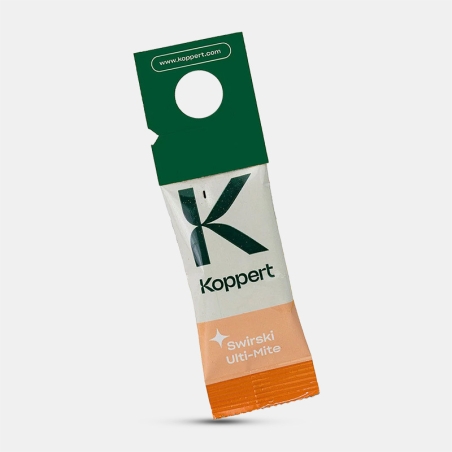
Swirskimite Ácaros Beneficiosos

Spical Plus (Neoseiulus Californicus) Contra Araña Roja
El jabón potásico es un producto muy interesante en la jardinería ecológica, especialmente para el control de plagas en cultivos como la marihuana. Sin embargo, como hemos visto, su eficacia depende en gran medida de cómo se utilice y con qué se combine. Las incompatibilidades del jabón potásico con otros productos, como pesticidas químicos, fungicidas sistémicos, fertilizantes foliares y aceites minerales, pueden reducir su efectividad e incluso dañar tus plantas si no se toman las precauciones necesarias. Si estás interesado en aprender más sobre el cultivo de marihuana y cómo manejar plagas de manera eficiente y sostenible de la mano de los mejores insecticidas, no dejes de seguir nuestras próximas entradas en el blog.





 Añadir como fuente preferida en Google


