Personalized attention +34 96 206 62 98
 Free shipping to Iberian Peninsula from 30€
 9/10 Rating
 Discreet shipping


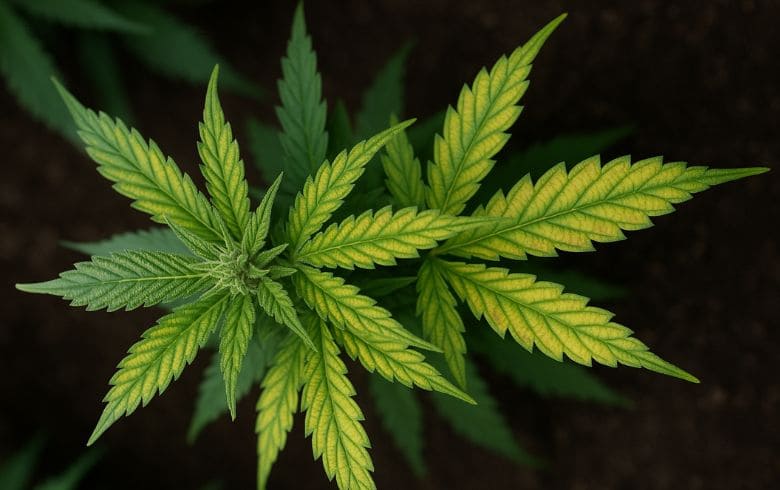
Yellow leaves on indoor plants can be a warning sign or simply a natural phase of the plant. However, when this issue appears without an obvious reason, it can be a symptom that something is wrong in your cultivation.
Imagine you have a plant growing perfectly, and after a few weeks, its leaves start changing color. First, you notice a few spots, then the yellowing spreads, and eventually, some leaves fall off. Are you overwatering or underwatering? Is it lacking nutrients? Or is there a hidden pest affecting its health?
In this article, we will examine in detail why indoor plant leaves, including cannabis, may turn yellow. We will cover how to make an accurate diagnosis, the most effective solutions, and some tips to prevent it from happening again.
What does it mean when a leaf turns yellow
Green leaves contain chlorophyll, which is a vital pigment for photosynthesis, the process by which plants convert light into energy. When a leaf turns yellow, it means it has lost part or all of its chlorophyll, reducing its ability to absorb and convert light.
There are several reasons why a leaf may lose chlorophyll:
- Natural aging. In some species, like deciduous trees, chlorophyll loss in autumn is normal and part of the plant’s life cycle.
- Nutrient deficiencies. When the plant lacks essential nutrients, chlorophyll production decreases.
- Environmental stress. External factors such as water shortage, extreme temperatures, or inadequate lighting can affect chlorophyll production.
- Diseases and pests. Fungi, bacteria, and insects can damage leaves and cause yellowing.
Interesting fact: not all yellow leaves indicate disease. Some plants naturally display colored leaves due to pigments like anthocyanins (purple, red) or carotenoids (orange, yellow), the same pigments that give color to fruits like carrots or blueberries.

Main causes of yellow leaves on indoor plants
Leaf yellowing in indoor plants is a sign that something is not functioning correctly in your plant care routine. This phenomenon, known as chlorosis, can result from multiple factors, ranging from environmental issues to nutrient deficiencies. It is important to identify the exact cause to apply the proper solution and prevent the problem from worsening.
Overwatering
Excessive watering is one of the most common causes of yellow leaves. When the soil remains constantly saturated, the roots suffocate and cannot absorb oxygen, leading to root rot. This prevents the plant from transporting nutrients properly, causing leaves to yellow and wilt.
Solution: Allow the soil to dry between waterings and ensure pots have proper drainage.
Underwatering
On the other hand, lack of water can also cause yellow leaves. When the plant does not receive enough water, it cannot photosynthesize efficiently, leading to dehydration and yellowing.
Solution: Water the plant when the soil is dry to the touch, but do not let it dry out completely.
Nutrient deficiencies
Plants require a variety of nutrients to stay healthy. A lack of any essential nutrient can manifest as yellow leaves:
- Nitrogen deficiency: older leaves turn yellow as the plant reallocates available nitrogen to new growth.
- Iron deficiency: new leaves turn yellow while the veins remain green (interveinal chlorosis).
- Magnesium deficiency: yellow spots appear between the veins of the leaves.
Solution: Use a balanced fertilizer and ensure the soil pH allows nutrient absorption. You can learn more about nutrient deficiencies and excesses in cannabis plants.

Inadequate lighting
Light is essential for photosynthesis. If a plant receives too much light, leaves may burn and turn yellow. Conversely, insufficient light prevents the plant from producing enough chlorophyll, which also causes yellowing.
Solution: Place the plant in a location with the proper light intensity according to its specific needs.
Diseases and pests
Fungi, bacteria, and insects such as mites or whiteflies are common causes of yellow leaves on indoor plants. Fungal diseases like fusarium can also cause yellowing and wilting.
Solution: Regularly inspect your plants and apply preventive or curative treatments as needed.
Incorrect soil pH
Soil pH affects a plant’s ability to absorb nutrients. A pH that is too high or too low can block the uptake of essential nutrients, leading to deficiencies and yellow leaves.
Solution: Measure the soil pH and adjust it according to the plant’s needs (for example, cannabis prefers a pH between 6.0 and 7.0).
Temperature stress
Extreme temperatures, both cold and hot, can stress plants and cause leaves to yellow. Cold temperatures can slow down plant metabolism, while excessive heat may cause dehydration.
Solution: Keep your plants in a stable environment with temperatures suitable for their species.
[ppgbo products=”388,8016,5319″ language=”en”]
Natural aging
As plants grow, older leaves may turn yellow and fall off. This is part of the plant’s natural cycle and is not a cause for concern.
Solution: Remove yellow leaves so the plant can focus energy on new growth.
Poor quality soil
Poor drainage or nutrient-deficient soil can harm plants. Compacted soil prevents roots from breathing and absorbing nutrients, causing leaf yellowing.
Solution: Use high-quality, well-aerated soil with good drainage.
[ppgbo products=”5090,6046,7173″ language=”en”]
Chemical overuse
Excessive use of fertilizers or pesticides can burn roots and leaves, causing a severe yellow leaf problem in both indoor and outdoor plants. This is known as nutrient toxicity.
Solution: Follow the manufacturer’s instructions carefully when using chemical products and avoid overapplication.
Flowering stage in cannabis plants
In cannabis plants, it is normal for older leaves to start turning yellow during the flowering stage. This happens because the plant redirects its resources (nutrients and energy) toward flower and bud production instead of maintaining older leaves. This is a natural process and does not necessarily indicate a problem.
Solution: Don’t worry if older leaves turn yellow during flowering. However, make sure the plant receives the necessary nutrients to support healthy growth and flower development, ensuring dense and abundant buds.

What to do if your cannabis leaves turn yellow
When your cannabis leaves turn yellow, it is important to act calmly but methodically to identify the cause and apply the correct solution.
As we have seen, chlorosis can have many causes, so to make an accurate diagnosis, inspect the plant and its environment carefully to determine any mistakes in care. Follow these steps to discover the possible cause.
Step 1: Observe the yellowing pattern
The first step is to analyze how and where the yellowing occurs. This gives clues about the possible cause:
- Older (lower) leaves yellow: usually indicates a nitrogen deficiency or natural aging.
- New (upper) leaves yellow: may indicate an iron, zinc, or calcium deficiency.
- Widespread yellowing: could be due to overwatering or underwatering, pH issues, or inadequate lighting.
- Yellow spots between veins: suggests a magnesium deficiency.
If you suspect a specific deficiency, use a targeted supplement or a complete fertilizer designed for cannabis.
Step 2: Check watering
Watering is one of the most common causes of yellow leaves. Follow these steps to evaluate if water is the issue:
- Check the soil: Insert a finger 2-3 cm (1 inch) deep. If it’s soaked, you are overwatering. If dry and dusty, the plant is underwatered.
- Check drainage: Ensure the pot has drainage holes and water does not accumulate.
Step 3: Verify soil and water pH
Incorrect pH can block nutrient uptake, causing yellow leaves.
- Measure soil pH with a pH meter to ensure it is in the proper range (6.0–7.0 for cannabis). If pH is too high (alkaline), use an acidifier like vinegar, citric acid, or a specialized product such as PH- Boom.
- Measure watering pH and keep it between 6.0–7.0. If pH is too low (acidic), use a base like baking soda or products such as PH+ Boom to adjust water pH.
[ppgbo products=”4290,396,2666″ language=”en”]
Step 4: Inspect for pests or diseases
Pests and diseases can also affect indoor plants, so regular and careful inspections are essential.
- Check leaves for insects such as mites, whiteflies, or aphids.
- Examine soil for larvae or fungi.
- Look for spots or deformations that may indicate fungal or bacterial disease.
If pests are found, use an organic insecticide (like neem oil) or chemical treatments. For fungal infections, apply a fungicide and improve airflow in the grow area.
Step 5: Check environmental conditions
Improper environmental conditions can also cause yellow leaves. Consider the following factors:
- Temperature: Extreme temperatures (hot or cold) stress the plant.
Maintain 68–82°F (20–28°C) during the day and 59–72°F (15–22°C) at night. - Humidity: Very high or low humidity affects plant health. Maintain 40–60% RH during vegetative stage and 40–50% during flowering.
- Lighting: Too much or too little light can cause yellowing. Provide 18 hours of light during vegetative growth and 12 hours during flowering.
Below is a summary table of common symptoms and possible causes of yellow leaves on indoor plants.
| Possible Cause | Recommended Solution | |
|---|---|---|
| Yellow leaves with dry, brown tips | Underwatering or low humidity | Increase watering frequency and use a humidifier if the air is dry. |
| Yellow, soft leaves | Overwatering or root rot | Reduce watering and improve soil drainage. Trim affected roots if rot is present. |
| Yellow leaves with green veins (chlorosis) | Iron or zinc deficiency | Apply iron chelates or micronutrient-rich fertilizers. |
| Lower yellow leaves with premature drop | Nitrogen deficiency | Use a fertilizer with higher nitrogen content (N). |
| Yellow leaves with scattered spots | Pest attack (mites, thrips, aphids) | Inspect and treat with potassium soap or neem oil. |
| Yellow leaves with curled edges | Temperature stress or drafts | Keep the plant between 64–77°F (18–25°C) and avoid sudden changes. |
| Yellow leaves with brown spots | Excess sunlight or burns | Move plant to indirect light or use a shade cloth. |
| Yellow leaves with weak growth | Insufficient light | Move plant to a brighter area or use LED grow lights. |
| Yellow, sticky leaves | Insect honeydew (aphids, scale) | Wash leaves with water and potassium soap; remove pests manually. |
In conclusion, yellow leaves on indoor plants, including indoor cannabis, are a sign that something is not working correctly in your plant care routine. This can be due to overwatering or underwatering, nutrient deficiencies, improper lighting, or pests; the key is to identify and address the issue promptly to ensure healthy growth and a successful harvest.
If you want to continue learning how to optimize cannabis cultivation and resolve any issues that arise, don’t miss our upcoming posts.