Personalized attention +34 96 206 62 98
 Free shipping to Iberian Peninsula from 30€
 9/10 Rating
 Discreet shipping


Chlorine is an essential element for plant growth, but in excess, it can become a silent enemy. Below, we explain how to identify the excess of chlorine in plants, its negative effects, and practical solutions to correct and prevent it. Additionally, we’ll provide tips on how to choose the appropriate irrigation water and maintain a healthy and sustainable crop.
What is chlorine and why is it important for plants?
Chlorine (Cl) is a chemical element that, although often associated with water disinfection, also plays a crucial role in plant development. It is one of the essential micronutrients that plants need in small amounts to carry out vital functions. Despite its minimal requirement, its absence or excess can have serious effects on crop health and growth.
Chlorine in nature
Chlorine naturally occurs in soil, water, and the atmosphere. In the soil, it is present in the form of chlorides, which are water-soluble ionic compounds. Plants absorb chlorine primarily through their roots, although they can also take it in small amounts through their leaves.
Functions of chlorine in plants
Chlorine participates in several key physiological processes essential for plant growth and development. Below are its most important functions:
- Photosynthesis: Chlorine is fundamental for photosynthesis, the process by which plants convert sunlight into chemical energy.
- Stomatal Regulation: Stomata are small openings in leaves that allow gas exchange, such as the intake of carbon dioxide (CO₂) and the release of oxygen (O₂). Chlorine helps regulate the opening and closing of these stomata.
- Ionic and Osmotic Balance: Chlorine acts as a regulatory ion within plant cells. It helps maintain osmotic balance, i.e., the pressure necessary for cells to remain turgid and functional.
- Disease Resistance: Studies have shown that chlorine can enhance plants’ resistance to diseases caused by fungi and bacteria.
- Enzymatic Activation: Chlorine is an essential cofactor for certain enzymes, such as carbonic anhydrase, which participates in CO₂ fixation during photosynthesis. Without chlorine, these enzymes cannot function properly.
How much chlorine do plants need?
Although chlorine is essential, plants require it in very small amounts, typically in the range of 0.2 to 0.4 mg per gram of dry matter. Most soils and water sources contain sufficient chlorine to meet these needs, so it is rarely necessary to add it as a fertilizer.
Chlorine is a clear example of the principle “less is more” in plant nutrition. While an adequate amount of chlorine benefits plants, an excess can be toxic and cause problems such as leaf burns, growth inhibition, and root damage. Therefore, it is crucial to understand how to manage chlorine levels in irrigation water and substrates.

How does an excess of chlorine in plants occur in plants?
Excess chlorine in plants is a problem that can arise for various reasons, many of which are related to common cultivation and irrigation practices. Although chlorine is an essential micronutrient, its accumulation in the substrate or plant tissues can be toxic and detrimental to plant growth. Below, we explore the main sources and causes of excess chlorine.
Irrigation water with high chlorine content
One of the most common sources of excess chlorine in plants is irrigation water. Many potable water sources, especially in urban areas, contain added chlorine as part of the disinfection process. This chlorine, while safe for human consumption, can be harmful to plants if not managed properly.
Excessive use of fertilizers with chlorides
Some fertilizers contain chlorides as part of their composition. While these fertilizers can be useful in certain contexts, their excessive or improper use can lead to chlorine accumulation in the substrate. Common fertilizers containing chlorides include:
- Potassium chloride (KCl): Widely used as a source of potassium.
- Calcium chloride (CaCl₂): Sometimes used to correct calcium deficiencies.
- Ammonium chloride (NH₄Cl): A nitrogen fertilizer that also provides chlorine.
Low-quality or poorly drained substrates
The type of substrate used can also influence chlorine accumulation. Low-quality substrates or those with poor drainage tend to retain salts, including chlorides, increasing the risk of toxicity. On the other hand, compacted substrates impede water flow and favor salt accumulation.
Symptoms of excess chlorine in plants
Excess chlorine in plants can manifest in various ways, both in physical appearance and overall development. Identifying these symptoms promptly is crucial to take corrective measures and prevent irreversible damage.

Leaf damage due to excess of chlorine
Visual symptoms are the first sign that something is wrong with your plants. Here’s how to recognize them:
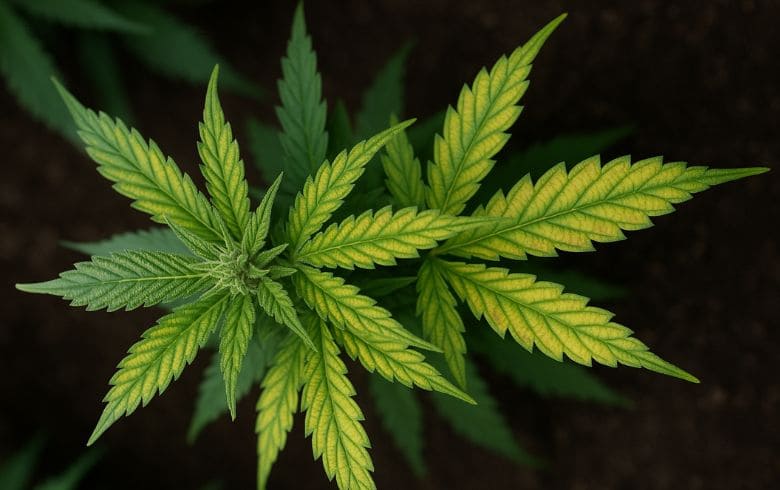
- Leaf burns: The tips and edges of leaves turn brown or yellow, as if they were burned. Initially, burns appear on older leaves but can spread to younger leaves if the problem persists.
- Chlorosis: Leaves lose their intense green color and become pale or yellowish. Unlike chlorosis caused by nutrient deficiencies, chlorosis due to excess chlorine usually appears first on older leaves.
- Leaf necrosis: Brown or black spots appear on leaves, which eventually dry out and die. Necrotic areas can expand and cause premature leaf drop.
- Wilting: Leaves appear droopy and limp, even when the substrate is moist. Excess chlorine damages roots and reduces their ability to absorb water and nutrients.
Effects on growth and yield
In addition to visual symptoms, excess chlorine can have a profound impact on plant growth and productivity.
- Stunted growth: Plants show slow or uneven development, with short stems and small leaves.
- Root damage: Roots become shorter, thicker, and darker in color. In severe cases, lesions or rot may appear.
- Reduced photosynthesis: Excess chlorine interferes with photosynthesis by damaging chloroplasts, the cellular structures responsible for this process. The plant produces less energy, resulting in slower growth and lower flower and fruit production.
- Nutritional imbalance: Excess chlorine can compete with other nutrients, such as nitrogen and potassium, and reduce their absorption. This can lead to secondary deficiencies that worsen plant problems.
How to differentiate excess chlorine from other issues
The symptoms of an excess of chlorine can be mistaken for those of other deficiencies or toxicities. Here are some key tips to help you tell them apart:
| Symptom | Excess Chlorine | Nitrogen Deficiency | Sodium Toxicity | Water Stress |
|---|---|---|---|---|
| Leaf burn | Brown or yellowish tips and edges, especially on older leaves. | No burns; fully yellow leaves. | Widespread burn across the entire leaf; leaves may curl. | No burns; leaves wilt and dry out. |
| Chlorosis | Yellowing on older leaves, starting at the edges and moving inward. | Even yellowing of older leaves, without burn marks. | Irregular yellowing, often accompanied by burns. | Mild yellowing, usually on younger leaves. |
| Wilting | Drooping leaves even when the soil is moist. | Drooping leaves, associated with slow growth. | Drooping and curled leaves, with a burnt appearance. | Drooping leaves only when the soil is dry. |
| Stunted growth | Slow growth, short stems, and small leaves. | Slow growth, with small and yellowish leaves. | Very slow growth, with thick, burned leaves. | Slow growth, dry and brittle leaves. |
| Roots | Short, thick, dark roots; may have lesions. | Normal roots, but the plant doesn’t absorb enough nitrogen. | Roots may be affected by salt buildup. | Dry, brittle roots due to lack of water. |
| Other symptoms | Necrosis at leaf tips and possible premature leaf drop. | Older leaves fall off prematurely; overall weak growth. | Visible salt buildup on the substrate surface. | Dry and cracked soil; leaves may become brittle. |
How to measure chlorine levels?
Measuring chlorine levels in irrigation water and the substrate is an essential step to prevent and correct toxicity problems in plants. Fortunately, there are accessible tools and methods that allow you to assess chlorine concentration with complete accuracy.
Measuring chlorine in water
Irrigation water is one of the main sources of chlorine, so it’s crucial to assess its concentration before use. There are several ways to measure this level.
- Test strips. They are easy to use and provide quick results. Simply dip the strip in the water and wait a few seconds to compare the color with the scale on the strip.
- Drop tests. This involves adding a few drops of reagent to a water sample. The color change will indicate the chlorine level.
- Digital chlorine meter. This is a more precise and professional option, ideal for stricter control.
Measuring chlorine in the substrate
As we’ve seen, chlorine can also accumulate in the substrate, especially if chlorinated water or fertilizers with chlorides are used. Therefore, it’s important to measure its concentration in case the substrate needs to be changed.
- Leachate. To measure chlorine in the substrate, you can create a leachate. This involves watering the substrate with distilled water, collecting the drained water, and then measuring the chlorine using one of the methods mentioned above. This method is useful because chlorine in the substrate is released into the water.
- Chlorine meters for soils. There are specific meters for soils that can provide a direct measurement, although they are less common than water meters.

How to interpret the results
Generally, chlorine measuring tools and kits include instructions for interpreting the results. Approximate levels are as follows:
| Chlorine Measurement | Safe Level | Concerning Level | Toxic Level |
| Water | Less than 0.5 ppm of chlorine | Between 0.5 and 2 ppm | More than 2 ppm |
| Substrate | Less than 50 ppm of chlorides | Between 50 and 200 ppm | More than 200 ppm |
Measuring other values
Excess chlorine can affect both the pH and EC of the water and the substrate, although not always in an obvious way. Chlorine in the form of sodium hypochlorite (as in tap water) typically raises the pH, making it more alkaline. However, if chlorine reacts with other compounds in the soil, it can produce acids and lower the pH.
Excess chlorine increases electrical conductivity (EC) because it adds soluble salts to the water and substrate, which can interfere with the absorption of other essential nutrients. The question arises: can you detect excess chlorine just by measuring pH, EC, and observing symptoms? Yes, but with limitations. If you notice that the pH is becoming uncontrollable (higher or unstable) and the EC rises without having added fertilizers, it could be a sign of chlorine or chloride buildup in the substrate.
What to do if you detect high chlorine levels?
If you detect high chlorine levels in the water or substrate, it is important to act quickly to prevent damage to the plants.
Root washing
Root washing is an effective technique for removing excess salts, including chlorides, from the substrate. Here’s how to do it:
- Prepare clean water. Use filtered, rainwater, or rested water (without chlorine).
- Water generously. Apply the water slowly to the substrate until it drains out of the drainage holes.
- Optionally, you can add special products for root washing, which help with a deeper cleaning.
- Repeat the process. Perform this procedure 2-3 times to ensure that the salts are removed.
- Prevent nutritional deficiencies. After washing, apply a balanced fertilizer to replenish the lost nutrients.
[ppgbo products=”5079,557,587″ language=”en”]
Replace the substrate
If the substrate is heavily saturated with chlorides, you may need to change it for a new one. Here’s how to do it:
- Carefully remove the plant. Take the plant out of the pot and remove the old substrate from the roots.
- Rinse the roots with clean water to remove any remnants of contaminated substrate.
- Prepare the new substrate. Use a high-quality substrate with good drainage.
- Place the plant in the new pot with the fresh substrate.
Change the irrigation water
If the water you’re using contains high chlorine levels, it’s essential to replace it with a more suitable source. Here are some alternatives:
- Rainwater: It’s an excellent option as it’s free of chlorine and other chemicals.
- Rested water: Leave the water in an open container for 24-48 hours to allow the chlorine to evaporate.
- Filtered water: Use a carbon filter or a reverse osmosis system to eliminate chlorine.
- Add sodium thiosulfate. This compound neutralizes chlorine instantly, but use it with caution to avoid altering the water balance.
Adjust the pH and EC of the substrate
As we mentioned earlier, excess chlorine can alter the pH and electrical conductivity (EC) of the substrate, which affects nutrient absorption, so both need to be corrected.
- Measure the pH and EC. Use a pH and EC meter to assess the substrate’s conditions.
- Adjust the pH. If the pH is too high or low, use specific products to correct it (for example, citric acid to lower pH or lime to raise it). Most often, you’ll need to acidify the soil.
- Control the EC. Perform a root wash if the EC is too high and avoid excessive use of fertilizers.
[ppgbo products=”5871,4518,2666″ language=”en”]
Strengthen plants after chlorine stress
If the plants have suffered a lot from excess chlorine, it’s advisable to give them some supplements to help them recover.
- Apply mycorrhizae and beneficial bacteria that promote root recovery and improve nutrient absorption.
- Use biostimulants such as seaweed extracts or amino acids, which strengthen plant resistance.
- Monitor symptoms. Yellowing leaves, burnt tips, or slow growth may indicate that chlorine is still affecting the plant.
[ppgbo products=”379,6525,7650″ language=”en”]
In summary, excess chlorine in plants, especially in cannabis cultivation, is a problem that should not be underestimated. It’s important to detect it early and apply the right solutions to maintain your plants’ health and performance. The tap water we often use contains chlorine levels that can be harmful to many plants. Therefore, it’s best to take preventive measures to avoid possible damage to your crop. If you want to keep learning how to take care of your cannabis plants, stay tuned for upcoming blog posts.